Monday, 15 February 2016

Mkurugenzi wa Tigo Kanda ya Kusini, Jackson Kiswaga, akizungumza na wakazi wa Tunduma na wafanyakazi wa duka jipya la Tigo Tunduma katika hafla ya ufunguzi wa duka hilo. Hafla hii ilifanyika mwishoni mwa wiki iliyopita

Mkuu wa wilaya ya Momba, Richard Mbeho, akiongea na wakaazi wa Tunduma (hawapo pichani) katika  hafla ya ufunguzi wa duka jipya la Tigo lilipo mjini Tunduma, Mkoa wa Mbeya mwishoni mwa wiki iliyopita

Wakazi wa Tunduma na wafanyakazi wa Tigo wa duka jipya la Tunduma wakisiliza kwa makini hotuba ya mgeni rasmi Mkuu wa Wilaya ya Momba, Richard Mbeho,(hayupo pichani) katika hafla ya ufunguzi wa duka hilo mwishoni mwa wiki iliyopita .

Mkuu wa Wilaya ya Momba, Richard Mbeho, aliyeko kulia na Mkurugenzi wa Tigo Kanda ya Kusini, Jackson Kiswaga, Meneja Ubora na Huduma kwa Wateja wa Tigo, Mwangaza Matotola,Meneja wa Operesheni kwa wateja Tigo kanda ya kusini, Laverty Khana(Kulia),  wakikata utepe kuashiria ufunguzi rasmi wa duka jipya la Tigo lililopomjini Tunduma mwishoni mwa wiki iliyopita

Mgeni rasmi  Mkuu wa wilaya ya Momba, Richard Mbeho, na  Mkurugenzi wa Tigo Kanda ya Kusini, Jackson Kiswaga,wakimsikiliza mmoja wa wafanyakazi wa Tigo wa duka la Tunduma kuhusu huduma zitakazotolewa katika duka hilo lililofunguliwa mwisho mwa wiki iliyopita.
Mkurugenzi wa Tigo Kanda ya Kusini, Jackson Kiswag na  Meneja wa Operesheni kwa wateja Tigo kanda ya kusini, Laverty Khana, wakimkabidhi zawadi Mkuu wa Wilaya ya Momba, Richard Mbeho aliyehudhuria hafla hiyo kama mgeni rasmi 

Mkurugenzi wa Tigo Kanda ya Kusini, Jackson Kiswaga akiwa katika picha ya pamoja na  Wafanyakazi wa Tigo wa duka jipya la Tigo Tunduma mara baada ya ufunguzi wa duka hilo 


Kampuni ya simu ya Tigo imefungua duka jipya Tunduma ambalo limepunguza adha kwa wateja wa kampuni hii ambao walikuwa wanatafuta huduma kwa wateja umbali mrefu toka kwa makazi yao  
Akizungumza wakati wa uzinduzi wa duka hilo Mkurungezi wa Tigo Kanda ya kusini Bw.Jackson Kiswaga alisema uzinduzi wa duka hili ni moja ya mipango ya kampuni ya Tigo kusogeza huduma karibu na wateja wake.
"Kampuni ya tigo imeangalia fursa zilizopo katika eneo la Tunduma ambapo kwa pamoja tumeiona ni jinsi gani tunaweza kusaidiana na wakulima na wafanya biashara kuweza kufanya huduma mabalimbali za kibenki kwa kutumia simu za mkononi"Alisema Kiswaga. 
Kiswaga alisema kuwa duka hilo linategemea kuhudumia wateja wapatao mia tatu kwa siku wakipata huduma mbalimbali ikiwemo huduma za kuunganishwa kwenye intaneti, usajili wa laini za simu na kurudisha laini zilizopotea pia kununua simu za kisasa.

Kwa upande wa katibu wa mkuu wa wilaya ya Tunduma  Mhe. Richard Mbeho alipongeza hatua za Tigo za ufunguzi wa duka hili kwa kuwa utarahisisha upatikanaji wa huduma kwa wateja wa wilaya ya Tunduma.

Thursday, 11 February 2016


Kiongozi Mkuu wa mfuko wa PPF (Director General) William Erio (kushoto) akipokea michoro ya jengo jipya la PPF Jijini Arusha kutoka kwa Mbunifu na Msimamizi Mkuu wa mradi wa ujenzi wa jengo hilo,  Arch. Dudley Mawalla (kulia) kutoka kampuni ya   MD Consultancy Ltd ya Dar es Salaam, katika hafla fupi ya makabidhiano rasmi ya jengo kutoka kwa mkadarasi wa kichina CREJ (EA) Ltd. Anayeshuhudia Katikati ni Injinia wa Miradi ya PPF, Injinia Marko Kapinga.


DG William Erio (pichani juu) ameisifu timu yote iliyoshiriki kufanikisha kukamilika kwa mradi huo katika ubora uliotakiwa na katika bajeti iliyopangwa mwaka 2012 bila kuongezeka pesa yoyote, kuanzia kitengo cha miradi ya PPF makao makuu, wabunifu na wasimamizi, mamlaka za Jiji, idara nyingine za Serikali na wakandarasi wenyewe. 

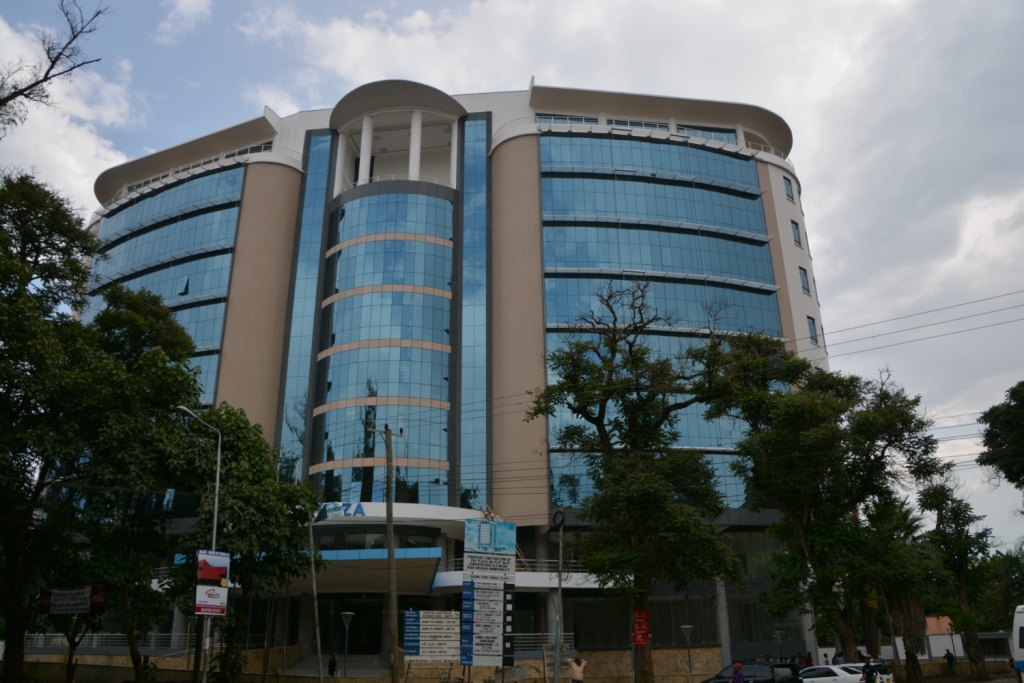
Jengo hilo maalumu kwa shughuli za ofisi na biashara lenye ghorofa 10 sambamba na eneo la basmenet yenye uwezo wa kupaki magari 168, lina thamani ya shilingi bilioni 32.5. Limejengwa eneo la Corridor, Kitalu Na. 15 Barabara ya zamani ya Old Moshi Jijini Arusha. lina huduma zote muhimu kwa majengo ya kisasa zikiwemo 'lifti' za kutosha, majenereta makubwa, mataki ya maji na mafuta ya jenerato, mfumo wa kukabiliana na moto na bila kusahau camera 90 za usalama na eneo kubwa la kuegesha magari ndani ya jengo.

Kwa mujibu wa Mbunifu na Msimamizi Mkuu wa mradi huo wa kisasa, Arch Mawala, ujenzi wa jengo hilo ulianza rasmi Agosti 2 mwaka 2018 ukitarajiwa kukamilika miezi 104 baadae na ulikamilika rasmi (practica completion) mwishoni mwa mwezi Disemba mwakaa jana. Hata hivyo imewachukua miaka miwili na miezi 3 kuweza kukamilisha kila kitu katika ubora wa kiwango cha juu, ambapo miezi hiyo mitatu ni ya ngongeza ya muda kutokana na sababu ambazo hazikuweza kuzuilika. 

Sehemu ya muonekano wa mbele wa jengo


Mpaka kufikia kukabidhiwa kwake hii leo, tayari ukaguzi wa mamlaka za Jiji na Usalama wa Majengo umeshakamilika na ruhusa ya matumizi kutolewa. Tayari jengo hilo limeshapata wapangaji watatu ambao wapo kwenye jengo tayari zikiwemo benki za TIB na FBNB, huku asilimia 21 ya wapangaji wengine wakiwa wamekwisha saini mikataba na PPF na wapangaji wengine 24 wakiwa katika mazungumzo.

Aidha kwa maelezo ya Mratibu wa PPF Kanda ya Kasakazini, Bw Onesmo Rushahi, Ofisi za Kanda ambazo kwa sasa ziko maeneo ya Kaloleni Jijini hapa zitahamishiwa katika Jengo hili jipya, huku mkakati wa PPF ukiwa ni kuhakikisha baada ya mwaka mmoja jengo hilo liwe limefanikiwa kupata wapangaji maeneo yote kwa shughuli za ofisi na biashara. 

Mkandarasi Mkuu ni kampuni ya CRJE (EA) Ltd akisaidiwa na wakandarasi wengine kwa huduma za jengo kama vile ICT na Usalama - SSTL Group Ltd, Lifti - S.E.C (EA) Ltd, AC - M.A.K Enginering Co. Ltd, Mfumo wa maji safi na maji taka - Jandu Plumbers Ltd, na Umeme ni Central Electrical International Ltd. Pia kulikuwa na mamlaka za kiserikali kama wasimamizi wa usalama makazini OSHA, Idara ya maji Asurha - AUWSA, NAESCO, Halmashauri ya Jiji na Bodi za Ukaguzi kama AQRB na CRB. 


Injinia Marko Kapinga, Meneja wa Utekelezaji wa Miradi ya PPF akikagua makabrasha yaliyokabidhiwa na mkandrasi kama michoro halisi ya namna jengo lilivyo kwa sasa


Kiongozi mkuu wa Kampuni ya CRJE (EA) Ltd, Bw Hu Bo (kulia) ambaye kamapuni yake ndio ilikuwa mkandarasi mkuu wa mradi akikabidhi funguo kwa Director General wa PPF Bw William Erio kama ishara ya makabdihiano ramsi ya jengo la PPF Plaza la Jijini Arusha hii leo. Kwa mbali anashuhudia Meneja wa jengo hilo kutoka PPF Bw..


Meneja wa PPF Kanda ya Kaskazini Bw Onesmo Ruhasha (kulia) akishuhudia makabidhiano rasmi ya jengo jipya la PPF Plaza la Jijini Arusha hii leo

Meneja wa PPF Uwekezaji Bw Selestine Some (kushoto) akimkabidhi ufungua kama ishara ya kuhamishia usimamizi wa jengo la PPF Plaza kwa Menenja Rasilimali, Bw Selemani Kituli wa PPF Kanda ya Kaskazini

Msimamizi Mkuu wa kazi zote za ujenzi kwa upande wa mkandarasi, kampuni ya CRJE, Bw Zhang Cuishan akitoa neno la shukrani katika hafla hiyo. 


Director General wa PPF Bw William Erio kulia pamoja na mkuu wa uwekezaji (PPF's Director of Investiment) Bw Steven Alfred 

DG William Erio katika picha ya pamoja mbeye ya sehemu kuu ya kuingilia kwenye jengo akiwa na timu ya wakandarasi, wasimamizi wabunifu wa mradi pamoja na wataalamu kutoka PPF Dar es Salaam.

Msanifu wa jengo na msimamizi mkuu wa mradi kutoka kampuni ya MD Consultancy Ltd, Arch Dudley Mawalla akiongoza ujumbe wa DG William Erio kufanya ziara ya ameneo mabalimabli ya jengo kabla ya makabidhiano rasmi.


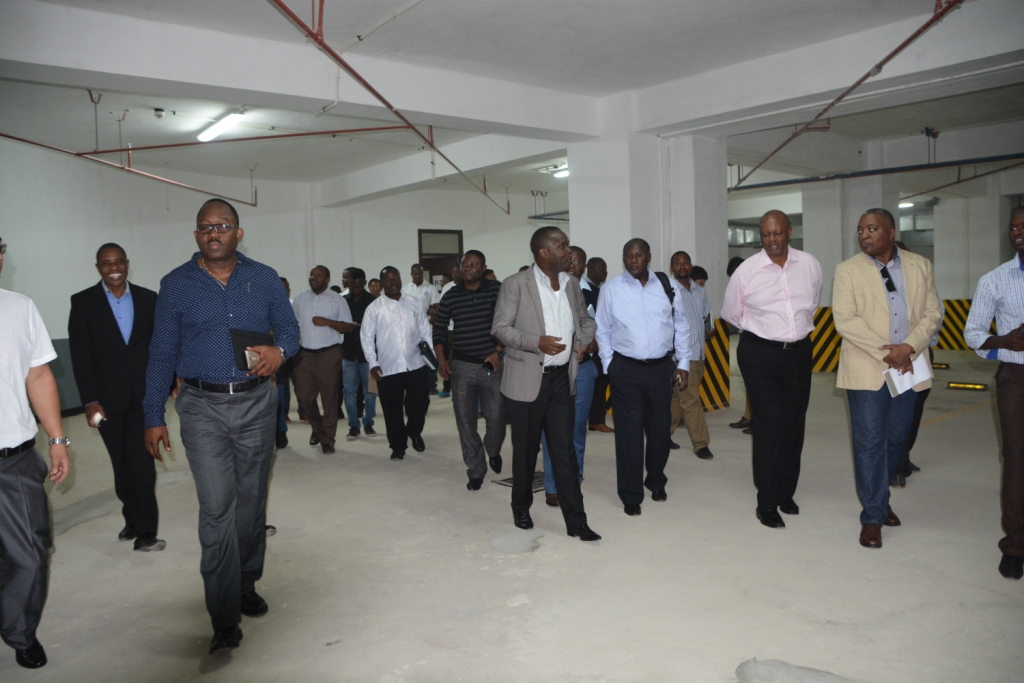
 Msafara ukitembelea eneo la kuegeshea magari chini ya jengo la PPF Plaza. Jumla ya magari 168 yanaweza kuegeshwa katika maeneo mbalimbali yaliyotengwa ndani ya jengo.


Msimamizi Mradi mkaazi kwa niaba ya PPF, Injinia  Norbert Nselu akitoa maelezo kwa Bw William Erio namna gari zinavyoweza ingia basement na kuegeshwa.


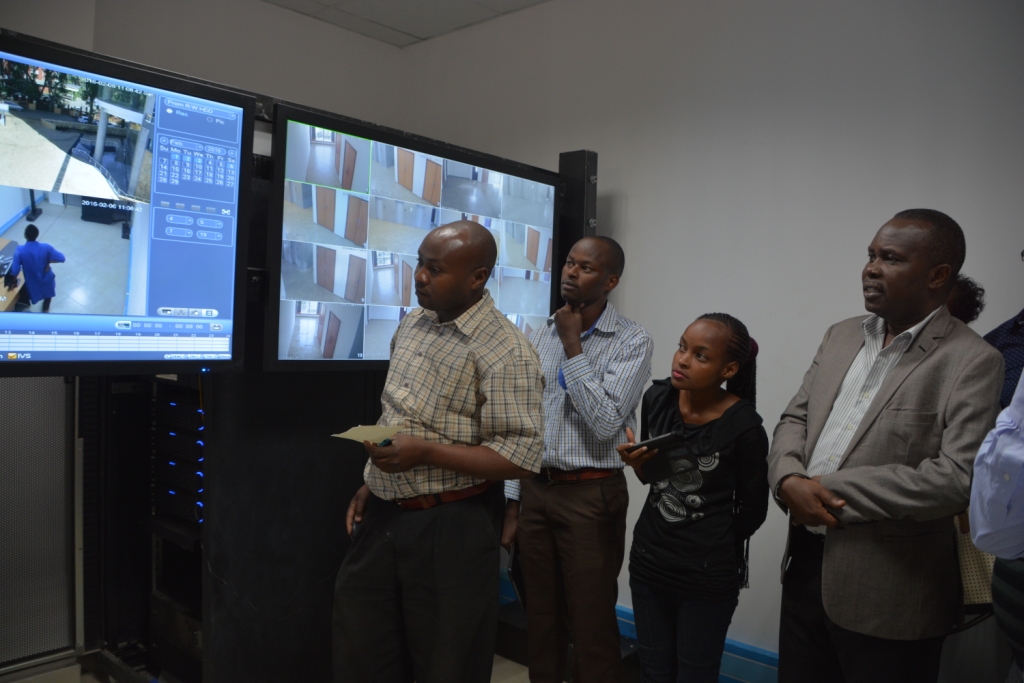
Director General William Erio akipata maelezo ya mfumo wa usalama wa kieletronic wa jengo namna unavyofanya kazi kutoka kwa mataalamu wa maswala ya usalama na mawasialiani ya kielectronic kutoka kampuni ya SSTL Ld, Bw Athumani Pongwe ndani ya chumba cha usalama. Jumla ya kamera 90  za usalama zimeunganishwa na taarifa zake kuletwa kwenye chumba hiki.


wakiangalia moja ya viambaza vya dani ya jengo.


Hapa DG William Erio na wataalamu wengine wakifurahia utani wa wake


Meeneja wa PPF Kaskazini Bw Onesmo Ruhasha, kulia na Director General wa PPF wakijadiliana jambo wakati wa kutembelea maeeneo ya jengo. 


Baadhi ya watumishi wa PPF Kanda ya kaskazini wakiangalia moja ya maneo ambayo ni maalumu kwa wapangaji kufanya biashara ama kuweka ofisi za shughuli zao.


msimamizi mkaazi kwa niaba ya PPF, Injinia Norbert Nselu akimfafanulia DG Erio hatua kwa hatua namna ujenzi ulivyoanza mkapa kukamilika kwake.


Director General wa PPF akiangalia madhari ya Jiji la Arusha kutokea ghorofa ya nane katika moja ya baraza za jengo la PPF Plaza lililokamilika na kukabidhiwa hii leo. Pamoja nae ni Msanifu wa jengo na Msimamizi Mkuu wa Mradi Arch. D Mawalla


Bw Selemani Kituli (property manager wa PPF) na Bw Selestine Some, Meneja Uwekezaji wakifahamishana jambo katika hafla fupi ya makabidhiano ya jengo la PPF Plaza kutoka kwa Mkandarasi Mkuu CRJE (EA) Ltd


Sehemu ya timu ya washauri wasimamizi wa mradi kwa maswala ya gharama, uimara na huduma (Project Costs, Structural Strength na Building Services Engineering) 


Msimamizi mradi mkaazi (Clerk of Works) kwa naiab ya PPF, Injinia Norbert Nselu akifafanua jambo katika hafla hiyo fupi ya makabidhiano kwa Director General wa PPF haonekani pichani.


Mkuu wa Kampuni ya CRJE (EA) Ltd, kampuni ya kichina ambayo ndiyo ilikuwa mkandarasi mkuu wa mradi uliokamilika wa jengo la PPF Plaza la Jijini Arusha akitoa salamu zake katika hafla fupi ya makabidhiano ya jengo hilo


Director General wa PPF Bw William Erio akisalimiana na Bw Habib O Kiango, mmoja wa watumishi wa ofisi ya PPF Kanda ya Kaskazini iliyoko Kaloleni Jijini Arusha. 


Director General wa PPF, Bw William Erio akisalimiana na Bi Getrude Haule, ambaye pia ni mmoja wa watumishi wa ofisi ya PPF Kanda ya Kaskazini iliyoko Kaloleni Jijini Arusha katika hafla ya makabidhiano ya jengo jipya la PPF Jijini hapa. Anayeshuhudia ni Bi Grace Estomih, mtumishi pia wa PPF Kanda ya Kaskazini ofisi ya Arusha. 


DG William Erio akitaniana na wafanyakazi wa taasisi anayoisimamia ofisi ya Kanda ya Kaskazini, Arusha hii leo


Director General wa PPF, Bw William Erio akisalimiana na Bw  Fortunatus Woiso, ambaye pia ni mmoja wa watumishi wa ofisi ya PPF Kanda ya Kaskazini iliyoko Kaloleni Jijini Arusha katika hafla ya makabidhiano ya jengo jipya la PPF Jijini hapa.


Mbunifu/msanifu mkuu  na msimamizi mkuu wa mradi wa jengo la PPF Plaza la Jijini Arusha, Arch. Dudley Mawalla akizungumza na wataalamu washauri wa masuala ya gharama za ujenzi ambao walisimamia fedha zote za mradi kwenda kwa wakandarasi na kuandaa bajeti yake, QS Mrosso (kushoto) kutoka kampuni ya Cost Consult Ltd ya Jijini Dar es Salaam.

PICHA&MAELEZO : TUMAINIEL SERIA, ARUSHA
ECA hosts launch of global think tank index report
Addis Ababa,  The Global Go To Think Tank Index Report launched at the Economic Commission for Africa features 140 think tanks from Africa and includes 1,432 think tanks that made the top lists in 50 categories globally.
The launch of the 2015 report, titled ‘ Why think tanks matter to policy makers and the public’, a second one in a series of global launches was attended by academics, think tanks professionals and the diplomatic corps to discuss the role of think tanks  in society and policy making.
The Global Go To Think Tank Index,produced since 2006 by the Think Tanks and Civil Societies Programme at the University of Pennsylvania  ranksthink tanks globally and by region for influence on policy and knowledge delivery and on research areas such as environment, foreign, security, energy and international development.
Mr. Steve Glovinsky, Special Adviser to the Executive Secretary of the ECA, explained “think tanks have come under great focus, given that there are multiple sources of information, it is harder for think tanks to grab attention of policy makers.”
ECA, he clarified, plans to work intensively as Africa’spremier think thank by improving knowledge delivery work and leveraging access to policy makers. “Think tanks improve decision making and promote discussions,” said Mr. Glovinsky. ECA along with three other Ethiopian think tanks is included in the index.  
On the role of think tanks, Professor Herman Musahara, the Acting Executive Director of the Organisation for Social Science Research in Eastern and Southern Africa said “think tanks enable policy makers and public to make informed decisions about public policy. Think tanks can bridge between state and civil society.”
Think tanks are seen as having a pivotal role in many areas including influencing policy on Africa’s economic transformation. Mr. Mekonnen Manyazewal, Advisor to the Ethiopian Prime Minister for International Trade Relation Negotiation Affairs, defined the niche think tanks occupy. “Decision makers are pre-occupied with management and the time they need to reflect on emerging issues, will be relegated to second priority. These decision makers need the service of support of the think tanks.”
To stay relevant in a world with dwindling funding opportunities, think tanks must be in business to provide knowledge, communicate that knowledge well and promote themselves, said Mr Jim Ocitti, Director of Public Information and Knowledge Management Division, the moderator of the launch.
Mr. Bartholomew Armah, Chief of Renewal of Planning at ECA’s Microeconomic Policy Division, counselled think tanks to “view how they fit in initiatives such as Agenda 2063 and the newly adopted Sustainable Development Goals and how they can serve these.”
“We must strive to channel the resources of our think tanks towards our shared development programmes and priorities,” suggested Mr. Armah. Think tanks can help fill the capacity deficit, Mr. Armah elaborated, for example on tracking SDGs, as these will require serious skills because the goals, targets and indicators are bigger and more complex than those of the MDGs.
Think tanks are often faced with difficulties in establishing research priorities, recruiting top talent while dependent on donor funding and maintaining independence. Mr. Armah acknowledged that funding constraints compel think tanks to multi-task just to make money but this raises the question of sustainability.
Experts advise think tanks not to depend on a narrow range of funding opportunities. For think tanks to survive, they must be credible, impactful and sustainable, those attending the launch concurred.
The Global Go To Think Tank Index, has been produced by the Think Tanks and Civil Societies Programme at the University of Pennsylvania since 2006 and ranks 140 think tanks from Africa. In the category of number of think tanks per country, South Africa leads with 86 followed by Kenya with 53, Nigeria at 48, Ghana at 37 and Uganda with 28.
Issued by:

Tuesday, 9 February 2016

Whether you require a New or Used Diesel Generator, you'll always find our service accommodating and thorough. In addition, as well as being strong on quality, you'll also find the price of our generators to be among the most competitive on the market too.

For Used Generators Click here 


For Brand New Diesel Generators Click here


Come and visit our new showroom: 

Eagle Generators (UK) Ltd
BAGNALL STREET
GREAT BRIDGE
West Midlands
DY4 7BS
United Kingdom

Sales Hotline: 0121 557 0270

Company Registration No. 7772136 VAT registration no. 120 5594 37


Eagle Generators (UK) Copyright © 
Habari za mchana wadau tafadhilini pokeeni codes nawatakieni kazi njema

Meneja Mawasiliano wa Tigo John Wanyancha (Kushoto) akikabidhi vifaa mbalimbali vifaa vya mawasiliano na michezo vyenye thamani ya shilingi milioni nane kwa Mwenyekiti wa Chama cha Waandishi wa Habari Mkoa wa Dodoma (CPC) Habel Chidawali, ili kufanikisha bonanza la wanahabari la kufunga mwaka 2015 lililopangwa kufanyika baadaye mwezi huu. Makabidhiano hayo yalifanyika mwishoni mwa wiki iliyopita mjini Dodoma.
Mwenyekiti wa Chama cha Waandishi wa Habari Mkoa wa Dodoma (CPC) Habel Chidawali, akitoa shukrani  mara baada ya kukabidhiwa vifaa mbalimbali vifaa vya mawasiliano na michezo vyenye thamani ya shilingi milioni nane na Meneja mawasiliano wa Tigo John Wanyancha  ili kufanikisha bonanza la wanahabari la kufunga mwaka 2015 lililopangwa kufanyika baadaye mwezi huu  wanaoshuhudia ni makamu mwenyekiti wa CPC Rachel Chibwete (kushoto) na katibu wa CPC bw .Bilison vedastus  


`


1.MTUNGI WA MAJI(WATER)
Mtungi huu una rangi NYEKUNDU wote. Mtungi huu hautumiki kuzimia moto wa umeme au mafuta, ila unazima aina nyingine zote za moto. Mtungi huu ni hatari sana kuutumia kwenye moto wa umeme
2. MTUNGI WA KABONDAYOKSAIDI(CO2)
Mtungi huu hutumika kuzima aina nyingi za moto ukiwamo umeme. Ni mwekundu lakini una lebo NYEUSI kama kitambulisho chake. Wakati wa kuzima moto usishike mwishoni mwa bomba kwakuwa gesi inayotoka ni ya baridi sana unaweza kuganda.
3. MTUNGI WA POVU(FOAM) Mtungi huu una rangi ya KRIMU kama kitambulisho chake. kwingine kote ni mwekundu. Unazima moto wa vitu vya majimaji pamoja na vitu vigumu 4. MTUNGI WA PODA(POWDER) Mtungi huu una lebo ya BLUU kama kitambulisho chake. Unaweza kuzima moto wa gesi, majimaji, na vitu vigumu.

Conflict grows out of inequality and exclusion[1]

By Carlos Lopes 
For a while Africans enthusiasm with the good economic performance of the continent has had a contagious lazy effect in many minds. It was as if the road to a new continental status was a given, even though we were all too busy approving many frameworks and strategies, centered on the need for real structural transformation. Unfortunately the time for a wake-up call is passed.  A combination of renewed conflict, drop on commodities demand and prices, including oil, high currency volatility, rising interest rates, choking of key economic locomotives and another devastating visit of our hated El Niño, are dominating yet again the African story line. Let us get the story straight.
The fundamentals for Africa’s economic prospects are there and intact. Africa continues to register the highest growth within a global slump, our international reserves took a beaten, but this is to be put in contrast with still internationally low debt levels, public deficits are still under control, and steady increase in investments from many , although not all, sources. Recent Summits with India and China, the two demographically equivalents, demonstrated trust in the future. Infra-structure projects have mostly not been affected by the downturn, from a new Suez Canal, to the largest ever dam in Ethiopia or world size solar farms in three countries. As far as the economy is concerned the news are actually better than most could afford. So, where are then the key factors that shift the mainstream narrative back to the past?
Squarely it is a combination of two factors: fragility perception and lack of deeper structural transformation, seen as the need to combine higher agricultural productivity, adding value to natural resources, modernized services associated with urban and youth bulges, powered by strong industrialization. African Agenda 2063 approved by the continent’s leaders is all about that.
If Africa is going to sustain a different narrative it has to be based in real changes. It is therefore opportune to focus on the part of the continental narrative less strategically assessed by Africans themselves: the causes of conflicts.
Between the early hours of April 11th and the late afternoon of May 14th 1994, fifty thousand Rwandese where killed with machetes by their neighbors in the Nyamata Hill. This was a very small part of what is now considered the largest genocide since World War II. A genocide that took the lives of hundreds of thousands of Rwandese. This shocking reality requires for us to understand why was this possible? One participant in the brutal killings said: “Rule number one was to kill. Rule number two, didn’t exist.”[2]
Is it possible to recognize amongst those we call terrorists, be it Al Shabbab, Boko Haram or those who perpetrate the carnages in Central African Republic or South Sudan, a similar rule book? Killing without remorse? Doing it like a job, better than planting or surviving in the periphery, and then have a good drink and laugh at the panic provoked and media attention. How can this happen? How can this continue to happen?
Huge differences in the distribution and exercise of political and economic power result in violent conflicts, in absence or failure of a political mechanism to address inequality. Inequality between groups rather than individuals is probably the foremost cause of conflict in Africa. It exists on three mutually reinforcing levels: economic, social and political. Relatively deprived groups seek or are persuaded by their leaders to seek redress. Privileged groups may also be motivated to fight to protect privileges. Horizontal inequalities are most likely to lead to conflict where they are substantial, consistent, and increasing over time. Exclusion, the extreme manifestation of inequality, is a major factor igniting conflicts. Of particular attention is the exclusion of youth. Uneducated and unemployed youth is a common characteristic to countries experienced conflicts. This marginalized and excluded fraction of the population has been more prominent in the conflict as combatants and least visible during peace.
Very often the richest regions in minerals, oil and gas and which contribute most of national revenue are the poorest in terms of social development and general wellbeing. The collapse of State institutions translated by its inability and ineffectiveness to provide basic services or security has proven to be an important trigger to conflicts. Social stability is based on a hypothetical social contract between citizens and government. People accept state authority so long as the state delivers services and provides reasonable economic conditions. With economic stagnation, decline, or worsening state services, the social contract breaks down, and violence is likely to occur. The collapse of infrastructure completes the erosion of state authority. The combination of a breakdown of institutions and physical infrastructure coupled with the use of ethnic violence creates the conditions in which violence becomes self-sustaining. Evidence suggests a higher incidence of conflict among countries with low per capita incomes, life expectancy, and meagre economic opportunities.
Of the 54 African states only 8 have not experienced armed or violent conflict since independence.
War confers benefits on individuals as well as costs which can motivate people to fight. Young uneducated men, in particular, may gain employment as soldiers. War also generates opportunities to loot, profiteer from shortages and from aid, trade arms, and carry out illicit production and trade in oil, drugs, diamonds, timber, and other commodities. Where alternative opportunities are few, because of low incomes and poor employment, and the possibilities of enrichment by war are considerable, the incidence and duration of wars are likely to be greater. This “greed hypothesis” has its base in rational choice economics. Very often, political leaders deliberately “rework historical memories” to engender or strengthen cultural identities in the competition for power and resources and justify the recourse to violence because of economic interest.
Environmental stress can be a serious catalyst for violence too, especially when people seek alternatives to desperate situations, while resource riches give strong motivation to particular groups to gain control over such resources. This reality is maximized by illegal trade and financial transactions that are depriving the continent of over fifty to sixty billion USD every year.
Results show that the economic performance of conflict areas is on average 10% below that of conflict-free areas in most GDP performance categories. A study estimated a loss of 284 billion USD (in constant 2000 rates) for 23 African countries, from 1990 to 2005. This figure represented then an average annual loss of 15% of their GDP. Regression analysis indicates a loss of about 2.2% GDP growth due to conflict. The interrelated nature of African economies also means that the costs of war within a sub-region generally result in economic costs for neighboring countries. These include production losses through loss of opportunities deriving from migration, trade losses, increased costs of security and policing and the costs of supporting refugees.
In Niger’s real GDP growth reduced to 3.6% in 2013 after expanding by 11.1% in 2012. In Mali, the series of events triggered by the 2012 outbreak of conflict and insecurity led to falls in government resources and expenditures by at least 30%. In DRC internal investment as a percentage of GDP dropped from 31.6% in 1997 to 17.7% in 1998; and reached its lowest level of 2% in 2000. Libya oil output has shrunk to less than 400,000 barrels per day (bpd), from about 1.7 million bpd before the outbreak of conflict. As a result, GDP contracted by an estimated 24% in 2014. The government accounts are expected to post a deficit of about 80 % of GDP in 2015, with the current account deficit exceeding 60% of GDP.
The message is clear. African priorities either deal upfront with the causes of conflict, or everybody will pay the price for the fragility perception. It is true that countries in Europe, Asia or the Americas were stabilized after prolonged wars that were fomented by the same ingredients of exclusion. They evolved to create better institutions, regulated markets and stabilized security. But it is also true that when it happened there, there was no universal telephony coverage or global media. A continent with more conflicts and affected people than Africa right now, continues to be associated with progress and change. I am talking about Asia. If Africa wants to follow suit there is a need for boldness, a common security framework and squarely accept the challenges of exclusion and managing diversity. That is the only way on deals with die hard perceptions.
Rule number one -to kill- with no rule number two, is still mobilizing far too many in the continent. We need Africa to focus on the “why”, and not allow this pervasive virus mentality to rotten past decade and a half achievements.
The why in fact can take inspiration from a virus’s metaphor. Any virus is basically a micro infectious agent that replicates only inside the living cells of other organisms. Viruses can infect all types of life forms.  Even if they are not inside an infected cell or in the process of infecting a cell, viruses exist in the form of independent particles. Virus spread in many different ways, but they do have a pattern. It is known that virus can come from far away.
The good news is that viral infections in humans provoke an immune response that usually eliminates the infecting virus. Immune responses can also be produced by vaccines, which confer an artificially acquired immunity to the specific viral infection.
Africa either has strong immunity to deal with these terror groups viral effects, because of the strength of its institutions and capabilities, or has to develop, fast, a vaccine that will rid us of its damage. Such a vaccine could be labeled “antidote to exclusion”.