Ubuntu-it's a word describing an African worldview, which translates as "I am because you are," and which means that individuals need other people to be fulfilled. And that is what this blog is all about.My contact details are: Ayoub Mzee- Tel +447960811614, email: swahilidiaries@yahoo.co.uk. Alternatively you can watch my program- swahili diaries on BEN TV SKY 184 or www.bentelevision.com every week Tuesdays at 10pm and Sundays at 10AM. Enjoy News stories in Photographs
Tuesday, 5 July 2011
Monday, 4 July 2011

Owelle Anayo Rochas Okorocha
Executive Governor of Imo State
(Governor's profile)
The Humble Honorable Kingsley Dimaku, the legislator from IMO state in nigeria gave Thanks giving party to friends and family in London this weekend

Our vision is to build an Imo State of our collective dream for this and indeed the future generations. We are on a mission to rescue Imo people from irresponsive leadership and imminent collapse

Chief Uzor of INGO was present


The Imo Rescue Mission campaign of His Excellency, Owelle Anayo Rochas Okorocha, is a call to action to the citizens of Imo State, friends and well-wishers across the world to help create a better future.

The major focus areas of their policy thrust include: Basic Education, Secondary Education, Tertiary Education, Health Care, Transportation, Water Resources, Rural Electrification/Energy Policy, Welfare and Agriculture & Natural Resources.


With strong community involvement, we can continue to improve lives for Imo State children and families. Whether you are willing to do business, live or visit our state, you can make a difference in creating a better future. Share the word about our state and help promote our Imo Rescue Mission. Visit our Facebook page
Our vision is to build an Imo State of our collective dream for this and indeed the future generations. We are on a mission to rescue Imo people from irresponsive leadership and imminent collapse
Chief Uzor of INGO was present
The Imo Rescue Mission campaign of His Excellency, Owelle Anayo Rochas Okorocha, is a call to action to the citizens of Imo State, friends and well-wishers across the world to help create a better future.
The major focus areas of their policy thrust include: Basic Education, Secondary Education, Tertiary Education, Health Care, Transportation, Water Resources, Rural Electrification/Energy Policy, Welfare and Agriculture & Natural Resources.
With strong community involvement, we can continue to improve lives for Imo State children and families. Whether you are willing to do business, live or visit our state, you can make a difference in creating a better future. Share the word about our state and help promote our Imo Rescue Mission. Visit our Facebook page
Press Releases: Elections in Thailand
Sun, 03 Jul 2011 10:32:43 -0500
Elections in Thailand
Press Statement
Victoria NulandDepartment Spokesperson, Office of the Spokesperson
Washington, DC
July 3, 2011
We congratulate the people of the Kingdom of Thailand, our long-time friend and ally, for their robust participation in the July 3rd parliamentary elections. The choice of who will lead Thailand now rests with those representatives elected by the Thai people.
We look forward to working with the next Thai government to broaden and strengthen our alliance, which is based on shared values and mutual respect. The United States also looks forward to working with the opposition and non-partisan civil society, as we have always done.
Saturday, 2 July 2011
BEN TV HOSTED A CONFERENCE ON THE UK BRIBERY ACT AND HOW ITS GOING TO AFFECT AFRICAESPECIALLY NIGERIA. THE GUEST OF HONOUR WAS FARIDA WAZIRI THE EFCC CHIEF

Bribery Act is designed to bring the UK in line with international norms on anti-corruption legislation. It will make it a criminal offence to give or receive a bribe (Corporate gift/hospitality) . It will also introduce a corporate offence of failing to prevent bribery.
Nigeria has received various perceptions in her fight against corruption and financial crimes. The new President, Dr. Goodluck Jonathan has indicated his willingness to allow the responsible commission to do their job without any fear or favour. So far, the main agency, the Economic & Financial Crime Commission (EFCC) has been able to secured billions of dollars back to the nation and presently has high profile cases pending in many courts across Nigeria, UK and other places.


Reality 2011 team was present
Hon Kingsley Dimaku fro the Imo state Government registering

Bribery Act is designed to bring the UK in line with international norms on anti-corruption legislation. It will make it a criminal offence to give or receive a bribe (Corporate gift/hospitality) . It will also introduce a corporate offence of failing to prevent bribery.
Nigeria has received various perceptions in her fight against corruption and financial crimes. The new President, Dr. Goodluck Jonathan has indicated his willingness to allow the responsible commission to do their job without any fear or favour. So far, the main agency, the Economic & Financial Crime Commission (EFCC) has been able to secured billions of dollars back to the nation and presently has high profile cases pending in many courts across Nigeria, UK and other places.
Reality 2011 team was present
The audience


Farida Waziri arriving for the conference


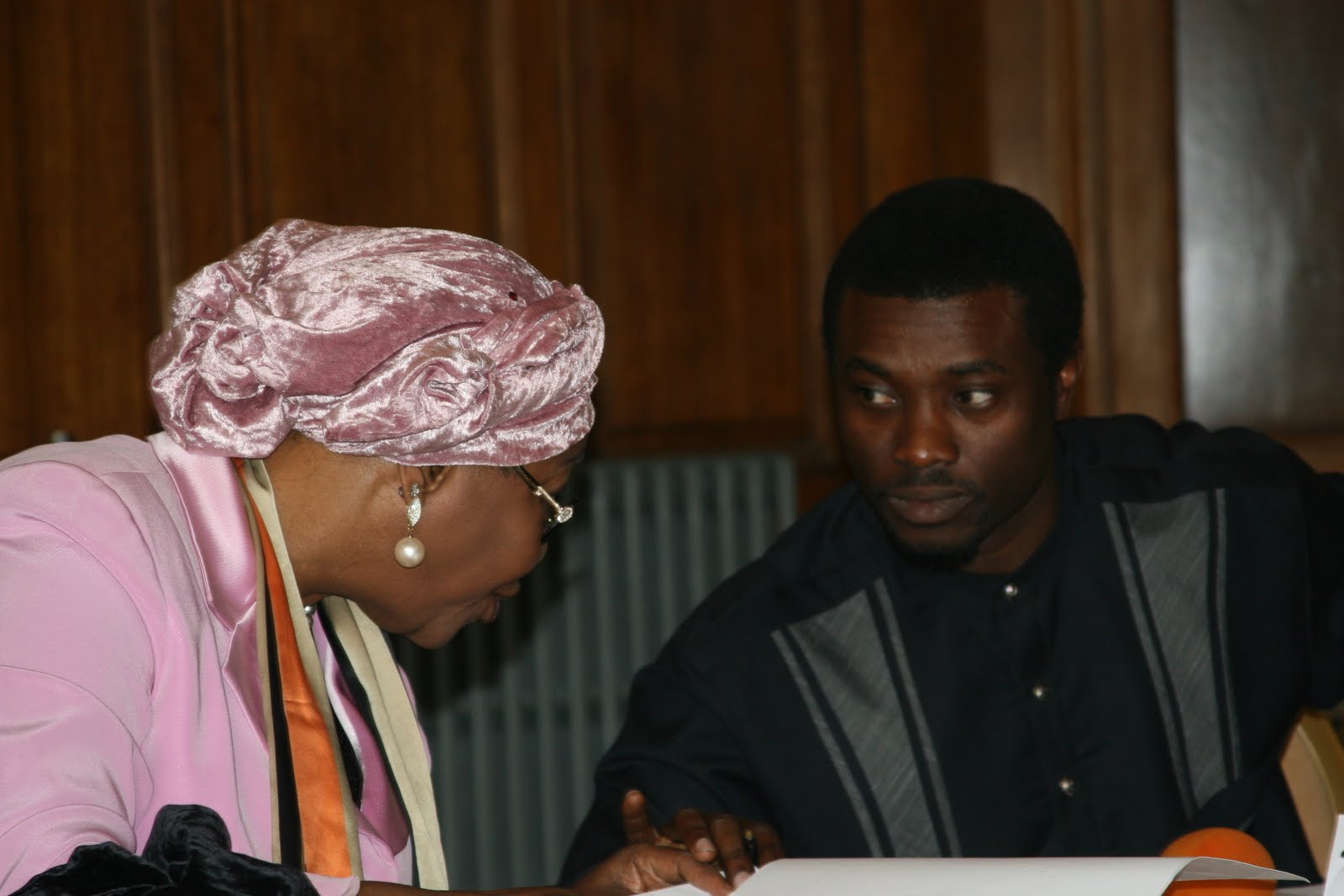
Farida Waziri and Dr Alistair soyode the Host
Farida Mzamber Waziri (Mrs.), is a retired Assistant Inspector General of Police (AIG). She brings to her appointment strong qualifications and impeccable professional competencies spanning 35 years of work and experience in the Nigeria Police. She is the Executive Chairman of EFCC
U.S. Special Envoy for Sudan Princeton Lyman Travels to Ethiopia and Sudan
Media Note
Office of the Spokesperson
Washington, DC
July 2, 2011
--------------------------------------------------------------------------------
Ambassador Princeton Lyman, U.S. Special Envoy for Sudan, departs Washington today en route to Addis Ababa, Ethiopia where he will support on-going talks between the parties to the 2005 Comprehensive Peace Agreement to reach a cessation of hostilities in Southern Kordofan and to resolve matters pertaining to the future relationship between Sudan and South Sudan.
In Addis Ababa, the Special Envoy will join African Union High-Level Implementation Panel Chairman Thabo Mbeki in his efforts to encourage the parties to reach agreements on resource sharing, disputed border areas, citizenship, and other matters to allow the peaceful transition to independence for South Sudan.
The Special Envoy will then travel to Khartoum for meetings with senior Sudanese officials, and to Juba to attend South Sudan’s independence ceremony on July 9.
The United States has been deeply engaged in Sudan, having helped to broker the 2005 Comprehensive Peace Agreement that ended decades of civil war between the country’s north and south. U.S. diplomatic and development efforts supported the conduct of a peaceful, on-time referendum on independence for Southern Sudan in January 2011. In the years ahead, the United States will remain a steadfast partner of the Sudanese people. The United States supports international efforts to promote full and timely implementation of the 2005 Comprehensive Peace Agreement, to reach a definitive end to the conflict in Darfur, and to ensure that Sudan does not provide a safe haven for international terrorists.
Learn more about the Office of the U.S. Special Envoy for Sudan: http://www.state.gov/s/sudan
Media Note
Office of the Spokesperson
Washington, DC
July 2, 2011
--------------------------------------------------------------------------------
Ambassador Princeton Lyman, U.S. Special Envoy for Sudan, departs Washington today en route to Addis Ababa, Ethiopia where he will support on-going talks between the parties to the 2005 Comprehensive Peace Agreement to reach a cessation of hostilities in Southern Kordofan and to resolve matters pertaining to the future relationship between Sudan and South Sudan.
In Addis Ababa, the Special Envoy will join African Union High-Level Implementation Panel Chairman Thabo Mbeki in his efforts to encourage the parties to reach agreements on resource sharing, disputed border areas, citizenship, and other matters to allow the peaceful transition to independence for South Sudan.
The Special Envoy will then travel to Khartoum for meetings with senior Sudanese officials, and to Juba to attend South Sudan’s independence ceremony on July 9.
The United States has been deeply engaged in Sudan, having helped to broker the 2005 Comprehensive Peace Agreement that ended decades of civil war between the country’s north and south. U.S. diplomatic and development efforts supported the conduct of a peaceful, on-time referendum on independence for Southern Sudan in January 2011. In the years ahead, the United States will remain a steadfast partner of the Sudanese people. The United States supports international efforts to promote full and timely implementation of the 2005 Comprehensive Peace Agreement, to reach a definitive end to the conflict in Darfur, and to ensure that Sudan does not provide a safe haven for international terrorists.
Learn more about the Office of the U.S. Special Envoy for Sudan: http://www.state.gov/s/sudan
Friday, 1 July 2011
Aid to help women in Africa undermined by jargon
FOR IMMEDIATE RELEASE
28 July, 2011
International donors have sought to improve the social, political and economic position of women in Africa through an approach known as “gender”. A new Counterpoint publication from Africa Research Institute – Talking gender to Africa – argues that this strategy is failing. The voices of African women have been lost.
The institutional jargon of gender programmes has been devised by foreign donor organisations. It breeds confusion and encourages misunderstanding. Standard gender terminology ranges from the ambiguous (“gender responsiveness”, “gender integration”, “gender sensitisation”) to the downright absurd (calls to “engender” development reports and policies).
According to Jackie Asiimwe, a Ugandan lawyer and women’s rights activist, “the gender language becomes lost in translation – it has remained an academic exercise and people struggle with what it means”. It is as if adoption of the correct jargon has become the end rather than the means.
Jargon fosters inaction and lip service on the part of patriarchal African governments and civil servants. Beyond the office walls of aid organisations and government ministries, few African women have heard of “gender” or are aware of its impact on their lives. Too little effort is expended in engaging African women in policy debates, or in attempting to reflect in policy their perspectives and priorities. Gender has become the preserve of the educated elite.
In Africa, the gender approach is not driven by a comprehensive understanding of the day-to-day realities of women’s lives, nor does it make adequate use of their wisdom and experience. Talking gender to Africa calls for the forcible dissolution of the jargon of gender, and a recognition by international donors that African women must again be placed centre-stage.
Notes to editors:
Africa Research Institute is a non-partisan think tank based in London. Our mission is to draw attention to ideas that have worked in Africa, and to identify new ideas where needed.
Talking gender to Africacan be downloaded from the Africa Research Institute website: http://bit.ly/o4O3Lp
For all media enquiries, please contact Edward Paice on 07941 228294 or 020 7222 4006 or Jonathan Bhalla on 07892 697304 or 020 7222 4006
FOR IMMEDIATE RELEASE
28 July, 2011
International donors have sought to improve the social, political and economic position of women in Africa through an approach known as “gender”. A new Counterpoint publication from Africa Research Institute – Talking gender to Africa – argues that this strategy is failing. The voices of African women have been lost.
The institutional jargon of gender programmes has been devised by foreign donor organisations. It breeds confusion and encourages misunderstanding. Standard gender terminology ranges from the ambiguous (“gender responsiveness”, “gender integration”, “gender sensitisation”) to the downright absurd (calls to “engender” development reports and policies).
According to Jackie Asiimwe, a Ugandan lawyer and women’s rights activist, “the gender language becomes lost in translation – it has remained an academic exercise and people struggle with what it means”. It is as if adoption of the correct jargon has become the end rather than the means.
Jargon fosters inaction and lip service on the part of patriarchal African governments and civil servants. Beyond the office walls of aid organisations and government ministries, few African women have heard of “gender” or are aware of its impact on their lives. Too little effort is expended in engaging African women in policy debates, or in attempting to reflect in policy their perspectives and priorities. Gender has become the preserve of the educated elite.
In Africa, the gender approach is not driven by a comprehensive understanding of the day-to-day realities of women’s lives, nor does it make adequate use of their wisdom and experience. Talking gender to Africa calls for the forcible dissolution of the jargon of gender, and a recognition by international donors that African women must again be placed centre-stage.
Notes to editors:
Africa Research Institute is a non-partisan think tank based in London. Our mission is to draw attention to ideas that have worked in Africa, and to identify new ideas where needed.
Talking gender to Africacan be downloaded from the Africa Research Institute website: http://bit.ly/o4O3Lp
For all media enquiries, please contact Edward Paice on 07941 228294 or 020 7222 4006 or Jonathan Bhalla on 07892 697304 or 020 7222 4006
Subscribe to:
Posts (Atom)