|


Tuesday, 22 May 2012


Sunday, 20 May 2012


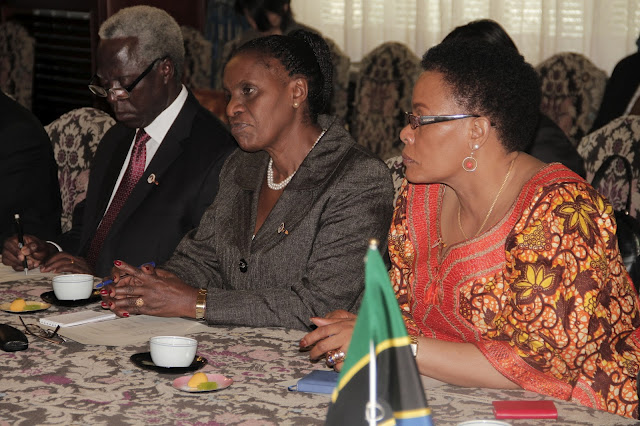
US Secretary of State Hon Hillary Clinton gestures after a group photo with African leaders and the USAID Administrator Dr Rajiv Shah (third right) prior to a reception to celebrate the new partnership to advance food security on the occasion of the G-8 summit at the D. Franklin room at the State Department in Washington DC.Photo Courtesy Of State House
Mamia Wajitokeza Mwili wa Aliyekua Mchezaji wa Timu ya Simba SC Patrick Mafisango


Winners of the Human Rights Defenders Award
Media Note
Office of the Spokesperson
Washington, DC
May 18, 2012
The U.S. Department of State is pleased to announce that Ales Byalyatski of Belarus and Uganda’s Civil Society Coalition on Human Rights and Constitutional Law are the joint winners of the 2011 Human Rights Defenders Award. This award recognizes individuals or non-governmental organizations that show exceptional valor and leadership in advocating the protection of human rights and democracy in the face of government repression.
Ales Byalyatski has bravely advocated on behalf of victims of political oppression and their families despite harassment by the Government of Belarus. As the founder of “Vyasna,” one of Belarus’ leading human rights organizations, Byalyatski provided legal and practical support to victims of an on-going crackdown and acted as a key source of information about human rights violations. He is currently a political prisoner, serving a four and a half year sentence for defending human rights.
Uganda’s Civil Society Coalition on Human Rights and Constitutional Law is honored for effectively defending the human rights of lesbian, gay, bisexual, and transgender (LGBT) individuals, often at great personal risk. The Coalition, which is comprised of 40 Ugandan NGOs, has successfully defended the rights of LGBT individuals in Ugandan courts, sparked public dialogue on LGBT rights in Uganda, and challenged widespread misperceptions and prejudices. The Coalition’s structure, effectiveness, and engagement with Ugandan civil society, government officials, and the Ugandan public provides a model for other human rights activists around the world.
This year’s nominees came from every corner of the world. Common World and the Little Bird Mutual Assistance Hotline in China, as well as the Mutual Support Group and the Center for Legal Action in Human Rights, from Guatemala were nominated organizations, as were an impressive group of individual nominees: Jorge Molano of Colombia, Adilur Rahman Khan from Bangladesh, George Freeman from Sierra Leone, Govinda Prasad Sharma Koirala of Nepal, Swaziland’s Justice Thomas Masuku, Igor Kalyapin from Russia, Zarganar from Burma, and Zaw Min Htut, a Rohingya rights activist living in Japan.
The United States stands with these and all human rights defenders and civil society activists who work hard every day, in every part of the world, to make real the promise of the Universal Declaration of Human Rights.

Statement by G8 Leaders on the Global Economy
Camp David, Maryland, United States, May 19, 2012
Camp David, Maryland, United States
May 18-19, 2012
Preamble
1. We, the Leaders of the Group of Eight, met at Camp David on May 18 and 19, 2012 to address major global economic and political challenges.
The Global Economy
2. Our imperative is to promote growth and jobs.
3. The global economic recovery shows signs of promise, but significant headwinds persist.
4. Against this background, we commit to take all necessary steps to strengthen and reinvigorate our economies and combat financial stresses, recognizing that the right measures are not the same for each of us.
5. We welcome the ongoing discussion in Europe on how to generate growth, while maintaining a firm commitment to implement fiscal consolidation to be assessed on a structural basis. We agree on the importance of a strong and cohesive Eurozone for global stability and recovery, and we affirm our interest in Greece remaining in the Eurozone while respecting its commitments. We all have an interest in the success of specific measures to strengthen the resilience of the Eurozone and growth in Europe. We support Euro Area Leaders’ resolve to address the strains in the Eurozone in a credible and timely manner and in a manner that fosters confidence, stability and growth.
6. We agree that all of our governments need to take actions to boost confidence and nurture recovery including reforms to raise productivity, growth and demand within a sustainable, credible and non-inflationary macroeconomic framework. We commit to fiscal responsibility and, in this context, we support sound and sustainable fiscal consolidation policies that take into account countries’ evolving economic conditions and underpin confidence and economic recovery.
7. To raise productivity and growth potential in our economies, we support structural reforms, and investments in education and in modern infrastructure, as appropriate. Investment initiatives can be financed using a range of mechanisms, including leveraging the private sector. Sound financial measures, to which we are committed, should build stronger systems over time while not choking off near-term credit growth. We commit to promote investment to underpin demand, including support for small businesses and public-private partnerships.
8. Robust international trade, investment and market integration are key drivers of strong sustainable and balanced growth. We underscore the importance of open markets and a fair, strong, rules-based trading system. We will honor our commitment to refrain from protectionist measures, protect investments and pursue bilateral, plurilateral, and multilateral efforts, consistent with and supportive of the WTO framework, to reduce barriers to trade and investment and maintain open markets. We call on the broader international community to do likewise. Recognizing that unnecessary differences and overly burdensome regulatory standards serve as significant barriers to trade, we support efforts towards regulatory coherence and better alignment of standards to further promote trade and growth.
9. Given the importance of intellectual property rights (IPR) to stimulating job and economic growth, we affirm the significance of high standards for IPR protection and enforcement, including through international legal instruments and mutual assistance agreements, as well as through government procurement processes, private-sector voluntary codes of best practices, and enhanced customs cooperation, while promoting the free flow of information. To protect public health and consumer safety, we also commit to exchange information on rogue internet pharmacy sites in accordance with national law and share best practices on combating counterfeit medical products.
Energy and Climate Change
10. As our economies grow, we recognize the importance of meeting our energy needs from a wide variety of sources ranging from traditional fuels to renewables to other clean technologies. As we each implement our own individual energy strategies, we embrace the pursuit of an appropriate mix from all of the above in an environmentally safe, sustainable, secure, and affordable manner. We also recognize the importance of pursuing and promoting sustainable energy and low carbon policies in order to tackle the global challenge of climate change. To facilitate the trade of energy around the world, we commit to take further steps to remove obstacles to the evolution of global energy infrastructure; to reduce barriers and refrain from discriminatory measures that impede market access; and to pursue universal access to cleaner, safer, and more affordable energy. We remain committed to the principles on global energy security adopted by the G-8 in St. Petersburg.
11. As we pursue energy security, we will do so with renewed focus on safety and sustainability. We are committed to establishing and sharing best practices on energy production, including exploration in frontier areas and the use of technologies such as deep water drilling and hydraulic fracturing, where allowed, to allow for the safe development of energy sources, taking into account environmental concerns over the life of a field. In light of the nuclear accident triggered by the tsunami in Japan, we continue to strongly support initiatives to carry out comprehensive risk and safety assessments of existing nuclear installations and to strengthen the implementation of relevant conventions to aim for high levels of nuclear safety.
12. We recognize that increasing energy efficiency and reliance on renewables and other clean energy technologies can contribute significantly to energy security and savings, while also addressing climate change and promoting sustainable economic growth and innovation. We welcome sustained, cost-effective policies to support reliable renewable energy sources and their market integration. We commit to advance appliance and equipment efficiency, including through comparable and transparent testing procedures, and to promote industrial and building efficiency through energy management systems.
13. We agree to continue our efforts to address climate change and recognize the need for increased mitigation ambition in the period to 2020, with a view to doing our part to limit effectively the increase in global temperature below 2ºC above pre-industrial levels, consistent with science. We strongly support the outcome of the 17th Conference of the Parties to the U.N. Framework Convention on Climate Change (UNFCCC) in Durban to implement the Cancun agreements and the launch of the Durban Platform, which we welcome as a significant breakthrough toward the adoption by 2015 of a protocol, another legal instrument or an agreed outcome with legal force applicable to all Parties, developed and developing countries alike. We agree to continue to work together in the UNFCCC and other fora, including through the Major Economies Forum, toward a positive outcome at Doha.
14. Recognizing the impact of short-lived climate pollutants on near-term climate change, agricultural productivity, and human health, we support, as a means of promoting increased ambition and complementary to other CO2 and GHG emission reduction efforts, comprehensive actions to reduce these pollutants, which, according to UNEP and others, account for over thirty percent of near-term global warming as well as 2 million premature deaths a year. Therefore, we agree to join the Climate and Clean Air Coalition to Reduce Short-lived Climate Pollutants.
15. In addition, we strongly support efforts to rationalize and phase-out over the medium term inefficient fossil fuel subsidies that encourage wasteful consumption, and to continue voluntary reporting on progress.
Food Security and Nutrition
16. For over a decade, the G-8 has engaged with African partners to address the challenges and opportunities afforded by Africa’s quest for inclusive and sustainable development. Our progress has been measurable, and together we have changed the lives of hundreds of millions of people. International assistance alone, however, cannot fulfill our shared objectives. As we move forward, and even as we recommit to working together to reduce poverty, we recognize that our task is also to foster the change that can end it, by investing in Africa’s growth, its expanding role in the global economy, and its success. As part of that effort, we commit to fulfill outstanding L’Aquila financial pledges, seek to maintain strong support to address current and future global food security challenges, including through bilateral and multilateral assistance, and agree to take new steps to accelerate progress towards food security and nutrition in Africa and globally, on a complementary basis.
17. Since the L’Aquila Summit, we have seen an increased level of commitment to global food security, realignment of assistance in support of country-led plans, and new investments and greater collaboration in agricultural research. We commend our African partners for the progress made since L’Aquila, consistent with the Maputo Declaration, to increase public investments in agriculture and to adopt the governance and policy reforms necessary to accelerate sustainable agricultural productivity growth, attain greater gains in nutrition, and unlock sustainable and inclusive country-led growth. The leadership of the African Union and the role of its Comprehensive Africa Agriculture Development Program (CAADP) have been essential.
18. Building on this progress, and working with our African and other international partners, today we commit to launch a New Alliance for Food Security and Nutrition to accelerate the flow of private capital to African agriculture, take to scale new technologies and other innovations that can increase sustainable agricultural productivity, and reduce the risk borne by vulnerable economies and communities. This New Alliance will lift 50 million people out of poverty over the next decade, and be guided by a collective commitment to invest in credible, comprehensive and country-owned plans, develop new tools to mobilize private capital, spur and scale innovation, and manage risk; and engage and leverage the capacity of private sector partners – from women and smallholder farmers, entrepreneurs to domestic and international companies.
19. The G-8 reaffirms its commitment to the world’s poorest and most vulnerable people, and recognizes the vital role of official development assistance in poverty alleviation and achieving the Millennium Development Goals. As such, we welcome and endorse the Camp David Accountability Report which records the important progress that the G-8 has made on food security consistent with commitments made at the L’Aquila Summit, and in meeting our commitments on global health, including the Muskoka initiative on maternal, newborn and child health. We remain strongly committed to reporting transparently and consistently on the implementation of these commitments. We look forward to a comprehensive report under the UK Presidency in 2013.
Afghanistan’s Economic Transition
20. We reaffirm our commitment to a sovereign, peaceful, and stable Afghanistan, with full ownership of its own security, governance and development and free of terrorism, extremist violence, and illicit drug production and trafficking. We will continue to support the transition process with close coordination of our security, political and economic strategies.
21. With an emphasis on mutual accountability and improved governance, building on the Kabul Process and Bonn Conference outcomes, our countries will take steps to mitigate the economic impact of the transition period and support the development of a sustainable Afghan economy by enhancing Afghan capacity to increase fiscal revenues and improve spending management, as well as mobilizing non-security assistance into the transformation decade.
22. We will support the growth of Afghan civil society and will mobilize private sector support by strengthening the enabling environment and expanding business opportunities in key sectors, as well as promote regional economic cooperation to enhance connectivity.
23. We will also continue to support the Government of the Islamic Republic of Afghanistan in its efforts to meet its obligation to protect and promote human rights and fundamental freedoms, including in the rights of women and girls and the freedom to practice religion.
24. We look forward to the upcoming Tokyo Conference in July, as it generates further long-term support for civilian assistance to Afghanistan from G-8 members and other donors into the transformation decade; agrees to a strategy for Afghanistan’s sustainable economic development, with mutual commitments and benchmarks between Afghanistan and the international community; and provides a mechanism for biennial reviews of progress being made against those benchmarks through the transformation decade.
The Transitions in the Middle East and North Africa
25. A year after the historic events across the Middle East and North Africa began to unfold, the aspirations of people of the region for freedom, human rights, democracy, job opportunities, empowerment and dignity are undiminished. We recognize important progress in a number of countries to respond to these aspirations and urge continued progress to implement promised reforms. Strong and inclusive economic growth, with a thriving private sector to provide jobs, is an essential foundation for democratic and participatory government based on the rule of law and respect for basic freedoms, including respect for the rights of women and girls and the right to practice religious faith in safety and security.
26. We renew our commitment to the Deauville Partnership with Arab Countries in Transition, launched at the G-8 Summit last May. We welcome the steps already taken, in partnership with others in the region, to support economic reform, open government, and trade, investment and integration.
27. We note in particular the steps being taken to expand the mandate of the European Bank for Reconstruction and Development to bring its expertise in transition economies and financing support for private sector growth to this region; the platform established by international financial institutions to enhance coordination and identify opportunities to work together to support the transition country reform efforts; progress in conjunction with regional partners toward establishing a new transition fund to support country-owned policy reforms complementary to existing mechanisms; increased financial commitments to reforming countries from international and regional financial institutions, the G-8 and regional partners; strategies to increase access to capital markets to help boost private investment; and commitments from our countries and others to support small and medium-sized enterprises, provide needed training and technical assistance and facilitate international exchanges and training programs for key constituencies in transition countries.
28. Responding to the call from partner countries, we endorse an asset recovery action plan to promote the return of stolen assets and welcome, and commit to support the action plans developed through the Partnership to promote open government, reduce corruption, strengthen accountability and improve the regulatory environment, particularly for the growth of small- and medium-sized enterprises. These governance reforms will foster the inclusive economic growth, rule of law and job creation needed for the success of democratic transition. We are working with Partnership countries to build deeper trade and investment ties, across the region and with members of the G-8, which are critical to support growth and job creation. In this context, we welcome Partnership countries’ statement on openness to international investment.
29. G-8 members are committed to an enduring and productive partnership that supports the historic transformation underway in the region. We commit to further work during the rest of 2012 to support private sector engagement, asset recovery, closer trade ties and provision of needed expertise as well as assistance, including through a transition fund. We call for a meeting in September of Foreign Ministers to review progress being made under the Partnership.
Political and Security Issues
30. We remain appalled by the loss of life, humanitarian crisis, and serious and widespread human rights abuses in Syria. The Syrian government and all parties must immediately and fully adhere to commitments to implement the six-point plan of UN and Arab League Joint Special Envoy (JSE) Kofi Annan, including immediately ceasing all violence so as to enable a Syrian-led, inclusive political transition leading to a democratic, plural political system. We support the efforts of JSE Annan and look forward to seeing his evaluation, during his forthcoming report to the UN Security Council, of the prospects for beginning this political transition process in the near-term. Use of force endangering the lives of civilians must cease. We call on the Syrian government to grant safe and unhindered access of humanitarian personnel to populations in need of assistance in accordance with international law. We welcome the deployment of the UN Supervision Mission in Syria, and urge all parties, in particular the Syrian government, to fully cooperate with the mission. We strongly condemn recent terrorist attacks in Syria. We remain deeply concerned about the threat to regional peace and security and humanitarian despair caused by the crisis and remain resolved to consider further UN measures as appropriate.
31. We remain united in our grave concern over Iran’s nuclear program. We call on Iran to comply with all of its obligations under relevant UNSC resolutions and requirements of the International Atomic Energy Agency’s (IAEA) Board of Governors. We also call on Iran to continuously comply with its obligations under the Nuclear Non-Proliferation Treaty, including its safeguards obligations. We also call on Iran to address without delay all outstanding issues related to its nuclear program, including questions concerning possible military dimensions. We desire a peaceful and negotiated solution to concerns over Iran’s nuclear program, and therefore remain committed to a dual-track approach. We welcome the resumption of talks between Iran and the E3+3 (China, France, Germany, Russia, the United Kingdom, the United States, and the European Union High Representative). We call on Iran to seize the opportunity that began in Istanbul, and sustain this opening in Baghdad by engaging in detailed discussions about near-term, concrete steps that can, through a step-by-step approach based on reciprocity, lead towards a comprehensive negotiated solution which restores international confidence that Iran’s nuclear program is exclusively peaceful. We urge Iran to also comply with international obligations to uphold human rights and fundamental freedoms, including freedom of religion, and end interference with the media, arbitrary executions, torture, and other restrictions placed on rights and freedoms.
32. We continue to have deep concerns about provocative actions of the Democratic People’s Republic of Korea (DPRK) that threaten regional stability. We remain concerned about the DPRK's nuclear program, including its uranium enrichment program. We condemn the April 13, 2012, launch that used ballistic missile technology in direct violation of UNSC resolution. We urge the DPRK to comply with its international obligations and abandon all nuclear and ballistic missile programs in a complete, verifiable, and irreversible manner. We call on all UN member states to join the G-8 in fully implementing the UNSC resolutions in this regard. We affirm our will to call on the UN Security Council to take action, in response to additional DPRK acts, including ballistic missile launches and nuclear tests. We remain concerned about human rights violations in the DPRK, including the situation of political prisoners and the abductions issue.
33. We recognize that according women full and equal rights and opportunities is crucial for all countries’ political stability, democratic governance, and economic growth. We reaffirm our commitment to advance human rights of and opportunities for women, leading to more development, poverty reduction, conflict prevention and resolution, and improved maternal health and reduced child mortality. We also commit to supporting the right of all people, including women, to freedom of religion in safety and security. We are concerned about the reduction of women’s political participation and the placing at risk of their human rights and fundamental freedoms, including in Middle East and North Africa countries emerging from conflict or undergoing political transitions. We condemn and avow to stop violence directed against, including the trafficking of, women and girls. We call upon all states to protect human rights of women and to promote women’s roles in economic development and in strengthening international peace and security.
34. We pay tribute to the remarkable efforts of President Thein Sein, Daw Aung San Suu Kyi, and many other citizens of Burma/Myanmar to deliver democratic reform in their country over the past year. We recognize the need to secure lasting and irreversible reform, and pledge our support to existing initiatives, particularly those which focus on peace in ethnic area, national reconciliation, and entrenching democracy. We also stress the need to cooperate to further enhance aid coordination among international development partners of Burma/Myanmar and conduct investment in a manner beneficial to the people of Burma/Myanmar.
35. We recognize the particular sacrifices made by the Libyan people in their transition to create a peaceful, democratic, and stable Libya. The international community remains committed to actively support the consolidation of the new Libyan institutions.
36. We condemn transnational organized crime and terrorism in all forms and manifestations. We pledge to enhance our cooperation to combat threats of terrorism and terrorist groups, including al-Qa’ida, its affiliates and adherents, and transnational organized crime, including individuals and groups engaged in illicit drug trafficking and production. We stress that it is critical to strengthen efforts to curb illicit trafficking in arms in the Sahel area, in particular to eliminate the Man-Portable Air Defense Systems proliferated across the region; to counter financing of terrorism, including kidnapping for ransom; and to eliminate support for terrorist organizations and criminal networks. We urge states to develop necessary capacities including in governance, education, and criminal justice systems, to address, reduce and undercut terrorist and criminal threats, including "lone wolf" terrorists and violent extremism, while safeguarding human rights and upholding the rule of law. We underscore the central role of the United Nations and welcome the Global Counterterrorism Forum (GCTF) and efforts of the Roma-Lyon Group in countering terrorism. We reaffirm the need to strengthen the implementation of the UN Al-Qaida sanctions regime, and the integrity and implementation of the UN conventions on drug control and transnational organized crime.
37. We reaffirm that nonproliferation and disarmament issues are among our top priorities. We remain committed to fulfill all of our obligations under the Nuclear Nonproliferation Treaty and, concerned about the severe proliferation challenges, call on all parties to support and promote global nonproliferation and disarmament efforts.
38. We welcome and fully endorse the G-8 Foreign Ministers Meeting Chair’s Statement with accompanying annex.
Conclusion
39. We look forward to meeting under the presidency of the United Kingdom in 2013.
Saturday, 19 May 2012




Thursday, 17 May 2012
 |
| Press release
Compassionate Conservatism is dead. Contemptuous Conservatism has taken its place - Speech by Liam Byrne MP to Demos
Liam Byrne MP, Labour’s Shadow Work and Pensions Secretary, today argued that 'Compassionate Conservatism' has given way to a ‘Contemptuous Conservatism’. In his second keynote speech to mark the 70th anniversary of the Beveridge Report he argued that Britain should renew, not abandon universalism, beginning with making rights a reality for disabled people.
This must be the foundation for social security in a country where disability now affects 11 million adults and some 770,000 children. With half of workless households home to someone with a disability, Byrne said the right of disabled people to work is the foundation stone and he slammed Government changes that mean:
The speech came just a fortnight after Iain Duncan Smith accused Remploy workers of, “not doing any work at all. Just making cups of coffee.” Liam Byrne MP, Labour’s Shadow Work and Pensions Secretary, said: On Contemptuous Conservatism: “In a series of reforms that should have been approached with care and attention this Government have used all the finesse of a bull in a china shop. “Iain Duncan Smith is now demonising those he is failing most. “Compassionate Conservatism is dead. Contemptuous Conservatism has taken its place.” On the Disability Living Allowance: “We have to make sure that reform doesn’t make a bad situation worse. “Many people receiving DLA use the money to fund the mobility – and care – they need to stay in work. “If this vital support is knocked away, then disabled people will be simply forced to quit.” Byrne argued that welfare changes now risk hitting disabled people on all sides, wrapping them in red tape with test after test: “Crucially we have to end the business of wrapping disabled people and their families in red-tape. “There are assessments for NHS care. For social care. For ESA. For DLA. For back to work support. “So, together Anne McGuire and I, together with shadow Social Care Minister, Liz Kendall, will be taking evidence around the country from people with disabilities, from carers, from campaigners, from public service and business leaders. “We have to ask how do local councils, the DWP and where needed the NHS, come together to offer one assessment of the health, social care, benefits and back to work support that disabled people might need?” On reform: “Now at a time of austerity, anxiety and fear, the same ideals of 70 years ago should inspire us to be reformers once again, reformers together, and restorers of the principles of William Beveridge.”
Ends
|
Wednesday, 16 May 2012
That's It: Mahakama ya Hakimu mkazi Kisutu imelikataa ombi la...
That's It: Mahakama ya Hakimu mkazi Kisutu imelikataa ombi la...: Mahakama ya Hakimu mkazi Kisutu imelikataa ombi la Mawakili wanaomtetea mtuhumiwa wa mauaji ya muigizaji wa filamu nchini Marehemu ST...
Subscribe to:
Posts (Atom)