


Showing posts with label Note: All materials on this site is copyright protected. Show all posts
Showing posts with label Note: All materials on this site is copyright protected. Show all posts
Monday, 12 January 2009
Monday, 29 December 2008
liverpool by the DOCKS
My Trip to Liverpool for xmass holidays


A new UN Security Council piracy resolution; no peace-keeping for Somalia
On Tuesday [16th Dec], the Security Council met to address the situation in Somalia . The Council was considering a US draft resolution on piracy. It was passed unanimously as Resolution 1851. It calls on all states to take an active role against piracy and deploy ships and planes to seize boats involved in piracy or those for which there are reasonable grounds for suspicion. It encourages the establishment of an international co-operation mechanism to act as a point of contact between states on all aspects of action against piracy, and recalls that further recommendations for action will be produced by the Secretary-General within three months. It encourages member states to cooperate with the TFG in the fight against piracy and decides that for the next twelve months those involved in the fight against piracy and armed robbery at sea might take “all necessary measures that are appropriate in Somalia”, that is onshore, inside Somalia, to suppress these activities, consistent with applicable international humanitarian and human rights law. This is a considerable advance on the Council’s previous resolution on piracy, (Res. 1846, 2nd December 2008) which calls on states to provide technical assistance to Somalia to enhance coastal security, welcomes the efforts to escort ships, decides such ships can enter the territorial waters of Somalia and use all necessary means to repress piracy as long as authorization has been provided, calls on all to cooperate in investigating and prosecuting of those involved, and urges states to implement their obligations under the 1988 Convention for the Suppression of Unlawful Acts against the Safety of Maritime Navigation. By contrast Resolution 1851 allows for all necessary means .... in Somalia , that is on land as well as at sea.
In connection with this, Secretary-General Ban ki-Moon, after reiterating that responsibility for peace and security in Somalia rested primarily with Somalis, and referring to the problems of humanitarian access to the estimated 1.5 million IDPs, outlined his unsuccessful efforts to investigate possibilities for the deployment of a Multinational Force in Somalia . He said he had approached 50 nations and three international organizations for contributions. No one had been prepared to play the lead role, and only thirteen countries had even agreed to provide anything at all. He therefore proposed three measures to provide security support for the Djibouti peace process. The first was to provide the AU with substantial and credible resources to reinforce AMISOM, including means to deploy the additional battalions pledged by Uganda and Burundi . He stressed that financing would be a major problem, but with the liquidation of UNMEE some assets could be donated to AMISOM. The Secretary-General emphasized that he thought the strengthening of AMISOM rather than any UN peacekeeping deployment was the current realistic option. Secondly the Security Council could consider provision of training for joint TFG/ARS forces, and capacity building for police and judiciary under an overall UN co-ordinated security sector reform strategy. The third suggestion was to add a quick reaction component to the current anti-piracy operations, to be able to launch operations into Somalia in support of UNPOS and AMISOM. The Secretary-General stressed that any such efforts should be placed in the context of a comprehensive approach which encouraged an inclusive peace process and assisted the parties to rebuild security and governance capacity. The UN, the international community, must, he said, send a positive signal that it was willing to provide a security path to complement the political consequence of the Djibouti peace process.
The significance of the Secretary-General’s suggestions is that any agreed UN commitment imposes a formal requirement on UN member states; anything else remains voluntary. This, in fact, underlines both the failure of the international community to agree on any policy for Somalia , and its lack of commitment. In the following Security Council discussions, it was clear that while a majority of those present agreed that piracy in Somali waters was a symptom of the problems and situation of Somalia, and while all classified this as extremely serious, it was not considered serious enough for the UN Security Council to authorise any UN force. It demonstrates yet again why Ethiopia decided to withdraw its forces by the end of the year. The current situation is a combination of neglect and disinterest by the international community and the total irresponsibility of Somali leaders. Ethiopia had hoped that any shortfall in Somali action would be made up for by international action. With that lacking, everything has to depend upon the Somali leadership. Somali leaders, both inside and outside the country must now rise to the occasion. They must take the lead, must be made to take the lead. The international community has consistently failed for the last two years to put its money where its mouth is. Piracy must be stopped, and on land where the origins lie. Real effort must be put behind the Djibouti peace process.
Somalia’s Foreign Minister, Mr. Ali Ahmed Jama, also addressed the Security Council, calling for a comprehensive and holistic strategy to cover piracy, terrorism and the humanitarian problem, and to include the authorization of a robust peace-keeping operation. AMISOM, he said, could be the nucleus of any such force. AMISOM’s mandate is, of course, to be reviewed on 22nd December by the AU Peace and Security Council’s ministerial meeting in Addis Ababa . The Peace and Security Commissioner, Ambassador Ramtane Lamamra, also addressed the Security Council. Noting that the announced withdrawal of Ethiopian forces was fully consistent with the Djibouti Agreement and should be seen as a significant contribution to the resolution of the conflict, he said it provided an opportunity to be taken advantage of. He underlined the importance of a robust mission capable of stabilizing the area. He therefore called on all friends of Somalia to pledge troops, logistics and equipment for a UN-authorized force to stabilize the country and be an integral part of a UN operation. Turning to piracy, Ambassador Lamamra underlined that piracy was part of the larger problem of lawlessness in Somalia . He stressed that AMISOM needed renewed political support and a clear vision from the international community. He wanted to see a strong and clear signal of the commitment of the international community to the peace and reconciliation process in Somalia and the full implementation of the Djibouti Agreement, authorization of a UN international support force in Somalia to include and complement an enhanced AMISOM, the necessary support for AMISOM to reach its authorised strength of 8,000, and assistance to put in place the national unity government and the expanded parliament envisaged in the Agreement. He looked to the Council to take firm and decisive action. This, he pointed out, would have a direct bearing on the ministerial meeting of the AU Peace and Security Council on the renewal of AMISOM’s mandate. This would be held next Monday [22nd Dec], the day after the IGAD Ministerial meeting to be held on Sunday. Kenya announced on Tuesday it would impose travel sanctions on President Abdullahi Yusuf and his family for obstructing peace, as threatened by the 29th October IGAD summit. These could include a ban on travel and a freeze on any assets in Kenya . Foreign Minister Moses Wetangula, announcing this on Tuesday, said a date for activating the sanctions had yet to be decided. It will be recalled that IGAD ministers will be meeting in Addis Ababa on Sunday.


A new UN Security Council piracy resolution; no peace-keeping for Somalia
On Tuesday [16th Dec], the Security Council met to address the situation in Somalia . The Council was considering a US draft resolution on piracy. It was passed unanimously as Resolution 1851. It calls on all states to take an active role against piracy and deploy ships and planes to seize boats involved in piracy or those for which there are reasonable grounds for suspicion. It encourages the establishment of an international co-operation mechanism to act as a point of contact between states on all aspects of action against piracy, and recalls that further recommendations for action will be produced by the Secretary-General within three months. It encourages member states to cooperate with the TFG in the fight against piracy and decides that for the next twelve months those involved in the fight against piracy and armed robbery at sea might take “all necessary measures that are appropriate in Somalia”, that is onshore, inside Somalia, to suppress these activities, consistent with applicable international humanitarian and human rights law. This is a considerable advance on the Council’s previous resolution on piracy, (Res. 1846, 2nd December 2008) which calls on states to provide technical assistance to Somalia to enhance coastal security, welcomes the efforts to escort ships, decides such ships can enter the territorial waters of Somalia and use all necessary means to repress piracy as long as authorization has been provided, calls on all to cooperate in investigating and prosecuting of those involved, and urges states to implement their obligations under the 1988 Convention for the Suppression of Unlawful Acts against the Safety of Maritime Navigation. By contrast Resolution 1851 allows for all necessary means .... in Somalia , that is on land as well as at sea.
In connection with this, Secretary-General Ban ki-Moon, after reiterating that responsibility for peace and security in Somalia rested primarily with Somalis, and referring to the problems of humanitarian access to the estimated 1.5 million IDPs, outlined his unsuccessful efforts to investigate possibilities for the deployment of a Multinational Force in Somalia . He said he had approached 50 nations and three international organizations for contributions. No one had been prepared to play the lead role, and only thirteen countries had even agreed to provide anything at all. He therefore proposed three measures to provide security support for the Djibouti peace process. The first was to provide the AU with substantial and credible resources to reinforce AMISOM, including means to deploy the additional battalions pledged by Uganda and Burundi . He stressed that financing would be a major problem, but with the liquidation of UNMEE some assets could be donated to AMISOM. The Secretary-General emphasized that he thought the strengthening of AMISOM rather than any UN peacekeeping deployment was the current realistic option. Secondly the Security Council could consider provision of training for joint TFG/ARS forces, and capacity building for police and judiciary under an overall UN co-ordinated security sector reform strategy. The third suggestion was to add a quick reaction component to the current anti-piracy operations, to be able to launch operations into Somalia in support of UNPOS and AMISOM. The Secretary-General stressed that any such efforts should be placed in the context of a comprehensive approach which encouraged an inclusive peace process and assisted the parties to rebuild security and governance capacity. The UN, the international community, must, he said, send a positive signal that it was willing to provide a security path to complement the political consequence of the Djibouti peace process.
The significance of the Secretary-General’s suggestions is that any agreed UN commitment imposes a formal requirement on UN member states; anything else remains voluntary. This, in fact, underlines both the failure of the international community to agree on any policy for Somalia , and its lack of commitment. In the following Security Council discussions, it was clear that while a majority of those present agreed that piracy in Somali waters was a symptom of the problems and situation of Somalia, and while all classified this as extremely serious, it was not considered serious enough for the UN Security Council to authorise any UN force. It demonstrates yet again why Ethiopia decided to withdraw its forces by the end of the year. The current situation is a combination of neglect and disinterest by the international community and the total irresponsibility of Somali leaders. Ethiopia had hoped that any shortfall in Somali action would be made up for by international action. With that lacking, everything has to depend upon the Somali leadership. Somali leaders, both inside and outside the country must now rise to the occasion. They must take the lead, must be made to take the lead. The international community has consistently failed for the last two years to put its money where its mouth is. Piracy must be stopped, and on land where the origins lie. Real effort must be put behind the Djibouti peace process.
Somalia’s Foreign Minister, Mr. Ali Ahmed Jama, also addressed the Security Council, calling for a comprehensive and holistic strategy to cover piracy, terrorism and the humanitarian problem, and to include the authorization of a robust peace-keeping operation. AMISOM, he said, could be the nucleus of any such force. AMISOM’s mandate is, of course, to be reviewed on 22nd December by the AU Peace and Security Council’s ministerial meeting in Addis Ababa . The Peace and Security Commissioner, Ambassador Ramtane Lamamra, also addressed the Security Council. Noting that the announced withdrawal of Ethiopian forces was fully consistent with the Djibouti Agreement and should be seen as a significant contribution to the resolution of the conflict, he said it provided an opportunity to be taken advantage of. He underlined the importance of a robust mission capable of stabilizing the area. He therefore called on all friends of Somalia to pledge troops, logistics and equipment for a UN-authorized force to stabilize the country and be an integral part of a UN operation. Turning to piracy, Ambassador Lamamra underlined that piracy was part of the larger problem of lawlessness in Somalia . He stressed that AMISOM needed renewed political support and a clear vision from the international community. He wanted to see a strong and clear signal of the commitment of the international community to the peace and reconciliation process in Somalia and the full implementation of the Djibouti Agreement, authorization of a UN international support force in Somalia to include and complement an enhanced AMISOM, the necessary support for AMISOM to reach its authorised strength of 8,000, and assistance to put in place the national unity government and the expanded parliament envisaged in the Agreement. He looked to the Council to take firm and decisive action. This, he pointed out, would have a direct bearing on the ministerial meeting of the AU Peace and Security Council on the renewal of AMISOM’s mandate. This would be held next Monday [22nd Dec], the day after the IGAD Ministerial meeting to be held on Sunday. Kenya announced on Tuesday it would impose travel sanctions on President Abdullahi Yusuf and his family for obstructing peace, as threatened by the 29th October IGAD summit. These could include a ban on travel and a freeze on any assets in Kenya . Foreign Minister Moses Wetangula, announcing this on Tuesday, said a date for activating the sanctions had yet to be decided. It will be recalled that IGAD ministers will be meeting in Addis Ababa on Sunday.


Monday, 8 December 2008


Saturday, 23 August 2008
DENVER USA LIVE
WATCH THE DIALOGUE PRESENTED BY AYOUB MZEE WITH MY MAN STUART THIS MONDAY 25TH AUGUST FOR AN UPDATE ON USA ELECTIONS LIVE FROM THE DEMOCRATS CONVENTION ,DENVER USA
 Hi
Hi
Ayoub mzee
Having graduatedfrom Harvard Law School with myDoctor of Laws degree, I spent the last two months intensivelystudying for the New York bar exam.But I'm happy to say that I'm now in Denver, volunteering at theDemocratic Convention. There will be over 15,000 mediarepresentatives here from all over the world...
Kaine supported Obama from the very beginning, since Obamamade a number of campaign stops for Kaine back in 2005 and for JimWebb (Senator from Virginia) back in 2006. Obama and the Virginiatrio (Kaine, Webb, and former VA Governor Mark Warner) all becamequite close during that period. Kaine, like Obama, was a civil rightslawyer before entering politics, and is a progressive Democrat thatbelieves in creating consensus with political opponents. Also,Virginia, a core "red state" was the first state in the nation toelect a black Governor back in 1989. Considering that the election istight, Virginia is likely to become a crucial swing-state thiselection. Attached is a picture of myself and Tim Kaine.But I have to admit that as a resident of Indiana, I'd also be happywith Senator Evan Bayh, who I've voted for twice.
Thank you very much for your consideration.
Kind regards,
Stuart YoungJuris Doctors, 2008
Harvard Law School
Three Young people from South London on their way to the Beijing Para Olympics
Three young volunteers from South London will be playing their part to ensure the smooth running of the 2008 Para Olympics. Leila Donegan, 21, from New Cross, Ashanti Bentil-Dhue, 19, from Catford and Elizabeth D’sa, 23, from Plumstead are all volunteers with the YV@Lewisham project, part of the government’s V programme, based at Youth A.I.D Lewisham. They have been selected from hundreds of young people across the country to travel to China as part of a British Council funded scheme to provide voluntary support to the China Disabled Persons Federation in hosting athletes from across the world competing in the 2008 Para-Olympics.
Leila, one of the volunteers says:
“I am very excited about going, it will be an opportunity to experience a completely different culture. I know it will be a challenge, especially overcoming the language barrier, but I hope to return having learnt some Chinese, and having the satisfaction of playing a part in making the Para Olympics a success”
Exciting volunteering opportunities are one of the special features of being a volunteer at Youth A.I.D, an organisation which has been providing services for young people in Lewisham for 35 years. The project has provided volunteering placements for young people in Camp America, Egypt, Albania YHA , and around the UK.
Marcus Senior, YV@Lewisham Staff, explains that “the sending of young people to the Beijing Olympics is part of Youth A.I.D’s strategy in preparing for the 2012 London Olympics, these young people will serve as role models and mentors to the next generation of young volunteers”.
Maria Dalrymple, Manager of Youth A.I.D Lewisham, stated that; “this is an important example of ambitious and dynamic young people making a positive contribution to their community, and indeed the world”
In an historic month where the United States sees Barack Obama become the official nominee for the Presidential election the UK is searching for Barack Obama’s of its own. An innovative scheme seeks to bring Black and other minority communities into the political system.
Operation Black Vote in partnership with Bristol City Council has re-launched the award winning Councillor Shadowing Scheme. The aim of this groundbreaking project is to ensure that Bristol has more Black and other minority ethnic councillors, and that local communities engage with the Authority at all levels of governance.
Eight individuals will be chosen to shadow high-level councillors from the three main political parties for a minimum of eight days over a six-month period. This dynamic leadership programme will equip and motivate participants to play a role in local party politics. They will also become community ambassadors, explaining and promoting the benefits of civic engagement and encouraging others to become involved in community affairs. The scheme will also give Councillors the opportunity to gain a greater understanding of BME communities.
The scheme has already enjoyed great success with three former participants standing in local elections, and one who made history as the youngest member of the South West Independent Monitoring Board.
 Hi
Hi Ayoub mzee
Having graduatedfrom Harvard Law School with myDoctor of Laws degree, I spent the last two months intensivelystudying for the New York bar exam.But I'm happy to say that I'm now in Denver, volunteering at theDemocratic Convention. There will be over 15,000 mediarepresentatives here from all over the world...
Kaine supported Obama from the very beginning, since Obamamade a number of campaign stops for Kaine back in 2005 and for JimWebb (Senator from Virginia) back in 2006. Obama and the Virginiatrio (Kaine, Webb, and former VA Governor Mark Warner) all becamequite close during that period. Kaine, like Obama, was a civil rightslawyer before entering politics, and is a progressive Democrat thatbelieves in creating consensus with political opponents. Also,Virginia, a core "red state" was the first state in the nation toelect a black Governor back in 1989. Considering that the election istight, Virginia is likely to become a crucial swing-state thiselection. Attached is a picture of myself and Tim Kaine.But I have to admit that as a resident of Indiana, I'd also be happywith Senator Evan Bayh, who I've voted for twice.
Thank you very much for your consideration.
Kind regards,
Stuart YoungJuris Doctors, 2008
Harvard Law School
Three Young people from South London on their way to the Beijing Para Olympics
Three young volunteers from South London will be playing their part to ensure the smooth running of the 2008 Para Olympics. Leila Donegan, 21, from New Cross, Ashanti Bentil-Dhue, 19, from Catford and Elizabeth D’sa, 23, from Plumstead are all volunteers with the YV@Lewisham project, part of the government’s V programme, based at Youth A.I.D Lewisham. They have been selected from hundreds of young people across the country to travel to China as part of a British Council funded scheme to provide voluntary support to the China Disabled Persons Federation in hosting athletes from across the world competing in the 2008 Para-Olympics.
Leila, one of the volunteers says:
“I am very excited about going, it will be an opportunity to experience a completely different culture. I know it will be a challenge, especially overcoming the language barrier, but I hope to return having learnt some Chinese, and having the satisfaction of playing a part in making the Para Olympics a success”
Exciting volunteering opportunities are one of the special features of being a volunteer at Youth A.I.D, an organisation which has been providing services for young people in Lewisham for 35 years. The project has provided volunteering placements for young people in Camp America, Egypt, Albania YHA , and around the UK.
Marcus Senior, YV@Lewisham Staff, explains that “the sending of young people to the Beijing Olympics is part of Youth A.I.D’s strategy in preparing for the 2012 London Olympics, these young people will serve as role models and mentors to the next generation of young volunteers”.
Maria Dalrymple, Manager of Youth A.I.D Lewisham, stated that; “this is an important example of ambitious and dynamic young people making a positive contribution to their community, and indeed the world”
In an historic month where the United States sees Barack Obama become the official nominee for the Presidential election the UK is searching for Barack Obama’s of its own. An innovative scheme seeks to bring Black and other minority communities into the political system.
Operation Black Vote in partnership with Bristol City Council has re-launched the award winning Councillor Shadowing Scheme. The aim of this groundbreaking project is to ensure that Bristol has more Black and other minority ethnic councillors, and that local communities engage with the Authority at all levels of governance.
Eight individuals will be chosen to shadow high-level councillors from the three main political parties for a minimum of eight days over a six-month period. This dynamic leadership programme will equip and motivate participants to play a role in local party politics. They will also become community ambassadors, explaining and promoting the benefits of civic engagement and encouraging others to become involved in community affairs. The scheme will also give Councillors the opportunity to gain a greater understanding of BME communities.
The scheme has already enjoyed great success with three former participants standing in local elections, and one who made history as the youngest member of the South West Independent Monitoring Board.
Wednesday, 30 July 2008
G8 HOKAKADO ON WATER

G8: The verdict
The 2008 G8 Summit acknowledged the importance of the water and sanitation sector
Credit: WaterAid
In early July the G8 leaders met for their annual summit, this year in Hokkaido, Japan.
We are pleased to report that WaterAid supporters' incredible campaigning efforts helped ensure that sanitation and water appeared on the agenda and were included in the leaders' final declaration.
The first faltering steps have been taken towards recognising their key role in reducing poverty – WaterAid and the End Water Poverty campaign were part of this.
However, the G8 didn't deliver what WaterAid is calling for as part of the End Water Poverty coalition. No global action plan, no global taskforce.
By the time the G8 next meet, in Italy 2009, around two million children will have died from entirely preventable diseases and billions of the world's poorest people will be left by their governments to live in squalor, disease and indignity.
The G8 have failed again to learn from history, experts and the poor themselves: tackling the sanitation and water crisis will hugely reduce global poverty.
Henry Northover, Head of Policy at WaterAid, said:
"The G8 leaders have committed themselves to review progress next year. There is now an opportunity to stress to the G8 the need for urgent attention on both water and sanitation in international development, and to end the woeful lack of progress on these most fundamental human rights.
"In the month that has seen emerging evidence that puts sanitation and water poverty as the biggest killers of children in the world, it is time that all leaders give these sectors the highest priority.”
So, what now?
We must continue to build public pressure ahead of the next major influencing opportunity, the UN High-Level MDGs meeting being held this September. WaterAid, through the growing End Water Poverty coalition, will lobby hard to ensure that sanitation and water is the central focus of the meeting.
The campaign continues because 2.5 billion people are still waiting for the world to act.Find out how you can take action
The 2008 G8 Summit acknowledged the importance of the water and sanitation sector
Credit: WaterAid
In early July the G8 leaders met for their annual summit, this year in Hokkaido, Japan.
We are pleased to report that WaterAid supporters' incredible campaigning efforts helped ensure that sanitation and water appeared on the agenda and were included in the leaders' final declaration.
The first faltering steps have been taken towards recognising their key role in reducing poverty – WaterAid and the End Water Poverty campaign were part of this.
However, the G8 didn't deliver what WaterAid is calling for as part of the End Water Poverty coalition. No global action plan, no global taskforce.
By the time the G8 next meet, in Italy 2009, around two million children will have died from entirely preventable diseases and billions of the world's poorest people will be left by their governments to live in squalor, disease and indignity.
The G8 have failed again to learn from history, experts and the poor themselves: tackling the sanitation and water crisis will hugely reduce global poverty.
Henry Northover, Head of Policy at WaterAid, said:
"The G8 leaders have committed themselves to review progress next year. There is now an opportunity to stress to the G8 the need for urgent attention on both water and sanitation in international development, and to end the woeful lack of progress on these most fundamental human rights.
"In the month that has seen emerging evidence that puts sanitation and water poverty as the biggest killers of children in the world, it is time that all leaders give these sectors the highest priority.”
So, what now?
We must continue to build public pressure ahead of the next major influencing opportunity, the UN High-Level MDGs meeting being held this September. WaterAid, through the growing End Water Poverty coalition, will lobby hard to ensure that sanitation and water is the central focus of the meeting.
The campaign continues because 2.5 billion people are still waiting for the world to act.Find out how you can take action
Festival events
Crowds enjoying the sun at Glastonbury Festival
Credit: WaterAid
Glastonbury Festival of Performing Arts
Since 1994, WaterAid has been delighted to be one of the main charities supported by the world renowned Glastonbury Festival of Contemporary Performing Arts, and its organiser Michael Eavis.
The event requires over one million gallons of water, and sanitation becomes a major concern when turning this 900 acre dairy farm into a gigantic, bustling tented city.
Find out more about what we got up to at the 2007 festival - and stay tuned for news of WaterAid at Glasto '08...
WOMAD - World of Music and Dance
In 2005, WaterAid was once again a major presence at the WOMAD festival in Reading. For the fifth year running, the weekend provided a wonderful opportunity to engage with the public and help spread WaterAid's messages of the need for clean water and effective sanitation for all.
Crowds enjoying the sun at Glastonbury Festival
Credit: WaterAid
Glastonbury Festival of Performing Arts
Since 1994, WaterAid has been delighted to be one of the main charities supported by the world renowned Glastonbury Festival of Contemporary Performing Arts, and its organiser Michael Eavis.
The event requires over one million gallons of water, and sanitation becomes a major concern when turning this 900 acre dairy farm into a gigantic, bustling tented city.
Find out more about what we got up to at the 2007 festival - and stay tuned for news of WaterAid at Glasto '08...
WOMAD - World of Music and Dance
In 2005, WaterAid was once again a major presence at the WOMAD festival in Reading. For the fifth year running, the weekend provided a wonderful opportunity to engage with the public and help spread WaterAid's messages of the need for clean water and effective sanitation for all.
Tuesday, 22 July 2008
commonwealth countries league
A CCL fundrissing dinner for disadvantaged Girl Child
The Commonwealth Countries League (CCL) has a fascinating and exciting history going way back to the SUFFRAGETTE Movement ... It started life as the British Commonwealth League. The BCL was conceived as an idea in 1923 by a group of women who had been involved in the suffrage movement While 'League' sounds old fashioned now, it was then the height of modernity and 'Commonwealth' was a word ahead of its time.


The Commonwealth Countries League(CCL) is a Civil Society Organisation which has about 400 paid members. It has a charity arm the Commonwealth Countries League (CCLEF) which sponsors secondary education for needy girls from the various Commonwealth Countries.
The CCL is run by an Executive Committee comprised of members elected from all parts of the Commonwealth and representatives of many affiliated organisations. Vice-Presidents can also be active members of this Committee.
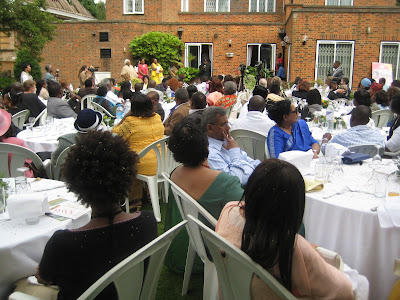
 There is a wide ranging programme of talks and social functions. Here Mrs Cecilia Muchemi, and other memberrs at the function
 The chair addressing the gathering about activities of CCL
 Recently CCL has considered Commonwealth matters relating to:-
the girl child
women's role in development
human rights
 Auctioning items for charity


 iTEMS FROIM THE COMMONWEALTH WERE ALSO SOLD TO RAISE FUNDS
 There has been a series of seminars on women's affairs and the family and a conference in Marlborough House was held to mark our 75th Anniversary
The Commonwealth Countries League (CCL) has a fascinating and exciting history going way back to the SUFFRAGETTE Movement ... It started life as the British Commonwealth League. The BCL was conceived as an idea in 1923 by a group of women who had been involved in the suffrage movement While 'League' sounds old fashioned now, it was then the height of modernity and 'Commonwealth' was a word ahead of its time.

The Commonwealth Countries League(CCL) is a Civil Society Organisation which has about 400 paid members. It has a charity arm the Commonwealth Countries League (CCLEF) which sponsors secondary education for needy girls from the various Commonwealth Countries.
The CCL is run by an Executive Committee comprised of members elected from all parts of the Commonwealth and representatives of many affiliated organisations. Vice-Presidents can also be active members of this Committee.
 There is a wide ranging programme of talks and social functions. Here Mrs Cecilia Muchemi, and other memberrs at the function
 The chair addressing the gathering about activities of CCL
 Recently CCL has considered Commonwealth matters relating to:-
the girl child
women's role in development
human rights
 Auctioning items for charity
 iTEMS FROIM THE COMMONWEALTH WERE ALSO SOLD TO RAISE FUNDS
 There has been a series of seminars on women's affairs and the family and a conference in Marlborough House was held to mark our 75th Anniversary
THE ORDAINING OF THE FIRST TANZANIA WOMAN PASTOR IN LONDON


Saturday, 19 July 2008

Jerry Okungu
AN EAST AFRICAN PERSPECTIVE ONE of the finest debates in Tanzania’s newspapers a few days ago was the debate about the Tanzanian education system. Critics of the system thought it was substandard, inferior and a disservice to the growing population of Tanzanians. There were obvious concerns that the current products of the University of Dar-es-Salaam along with other local universities were incapable of competing with their counterparts from Kenya and Uganda; that products from Kenyan and Ugandan universities were better prepared for the competitive business world. However, what took me aback was the vicious attack on the use of Kiswahili in Tanzania’s institutions of learning at all levels. Because Kiswahili was Tanzania’s national language, Tanzanians spoke it freely and even preferred it in institutions of learning. Quoting a number of professors from the University of Dar-es-Salaam, it was revealing that professors were frustrated by the low level of English language forcing them to resort to Kiswahili in order for their lectures to have meaning. More disturbing was the realisation that Tanzanians may not be as good masters of Kiswahili as the rest of East Africa may think. A number of them were said not to speak it well and even considered it as foreign as English. In Kenya, we always assume that Kiswahili is an urban language only useful for communicating with other ethnic communities when we are in town. When we get back to our rural homes, we abundantly indulge in our mother tongues with relish to the extent that for one to be elected a Member of Parliament in a rural constituency, proficiency in one’s mother tongue becomes a prerequisite. What I didn’t know was that this is also the trend in Tanzania, contrary to our belief that Tanzanians only speak Kiswahili. Right now, many Tanzanians, journalists included, speak sheng Kiswahili, a corruption of English, Kiswahili and other local languages. It is very common to find words such as feki for fake, penalti for penalty and bethidei for birthday in reputable daily newspapers. For this reason, many able Tanzanians are sending their children to local expatriate schools or better still send their children to Kenya and Uganda before shipping them to the United Kingdom and other Commonwealth countries for quality education. Quality education here includes the notion that a good command of written and spoken English makes one a cut above the crowd. If this degrading of Kiswahili succeeds, Nyerere’s philosophy of one language, one nation will have faltered. My fear is that if Tanzania loses the grip on Kiswahili, there may be no real motivation for the rest of the East African Community citizens to master the language considered the lingua franca of our region. However, the most shocking setback for Nyerere’s enduring philosophy was the realisation that last week, the Tanzanian Parliament finally made it official that the country had abandoned Ujamaism—the country’s version of socialism. This policy statement was made in Parliament by Tanzania’s minister for East African Cooperation as part of the clarification that the breakup of the EAC in 1977 was due to divergent economic policies pursued by the three partner states at the time. For that reason, implementing protocols on the Common Market, Customs Union and the Monetary Union became impractical. At that time, while Julius Nyerere’s CCM pursued Socialism with vigour, Milton Obote’s UPC was toying with the Commonman’s Charter while Jomo Kenyatta’s kitchen cabinet clung to the Western mode of capitalism inherited from the British and buoyed by the Americans. With the death of Ujamaism, the curtain will definitely fall of the most celebrated Arusha Declaration where the philosophy of Nyerere’s African Socialism was expounded. What may worry ordinary Tanzanians most is that as they embrace the new culture of capitalism that made them disparage Kenyans as a man-eat-man society, will they stomach the new culture of greed that has seen so many of their leaders in the Kikwete government thrown into the political wilderness? It is true Nyerere’s economic policies failed miserably to the extent that before he quit office, Tanzania was truly a man-eat-nothing society. There was nothing to buy in the shops. A bar of soap or cooking oil could cost and arm and a leg. However, despite all these hardships, Tanzanians were a proud people. There were few beggars on the streets while common theft or bank robberies were unheard of. All the land belonged to the state. Will the end of Ujamaism usher in unbridled greed and high level corruption that has permeated the Kenyan society?
jerrykokungu@yahoo.com [new vision]
 Officers carry the casket containg the body of slain peacekeeper Julius Osega at the funeral service yesterday
By Herbert Ssempogo [new vision]
THE UGANDAN Police officer who was killed last week while on a peace keeping mission in Sudan had been set for a promotion, it emerged yesterday. Detective superintendent of Police Julius Osega was due to be elevated to the post of legal officer for UNAMID, the UN/AU mission in Darfur, according to his supervisor, Julius Tumushabe. “When he got to Darfur, he became the officer in charge of a police station. His commitment impressed the UN team,” Tumushabe, who accompanied Osega’s body to Uganda, said during a requiem service held in Kampala Church in Kireka, a city suburb. Prior to his departure to Darfur, Osega, a lawyer, had been attached to the Police’s legal department where he was in charge of the human rights and complaints desk. On the fateful day of July 15, Tumushabe told mourners, Osega and his colleagues were ambushed in a valley where suspected militiamen showered them with bullets. He was killed along with six other peacekeepers in the worst attack on UN forces so far. “Osega hid close to the vehicle, where he was hit by a bullet” Tumushabe said, adding that the assailants stripped all the bodies. The team had gone to investigate deaths that occurred close to where they perished. Wails and shrieks filled the church when smartly dressed Police officers brought in the casket, draped in UN and AU flags. Two of the bereaved, among them Osega’s sister, Anne Talemwa, were so overwhelmed by grief that they had to be carried away. Osega’s wife, Rhona, and the couple’s five children, all dressed in black, sat a few metres from the coffin. The family endured a week-long wait since receiving the tragic news last Wednesday. It was in the same church where Osega, a born-again Christian, had asked the congregation to pray for him only a month earlier. He had brought home the body of his colleague, Inspector John Oketcha, who was murdered in Darfur on May 28. Addressing the mourners, deputy Inspector General of Police, Julius Odwee, announced that a policy to guide the deployment of Police on foreign missions was in the offing. He demanded that UNAMID investigates the murders. Several senior Police officers attended the mass. The body was flown in aboard a UN plane yesterday at about 1:00am. Police commissioner in charge of human resource, Benson Nyeko, and a few relatives were at Entebbe Airport when the plane arrived. Before landing in Uganda, the plane flew to Rwanda to deliver the remains of the five policemen killed alongside Osega. The burial is set for Saturday in Aloet, Soroti district.
Tuesday, 6 May 2008
The late Omar Lambi- a community leader(RIP)
Kiongozi Mwandamizi wa Tanzania Association
UK (Uingereza)Omari Lambi ....the last journey
 Omari LAMBI(R.I.P)
 Tanzanians and friends of Tanzania came in full force to pay their last respects
 Mourners in a state of sadness and loneliness at the loss of their dear friend and community leader OMAR .
 "Nor can a soul die except by God as leave, the term being fixed as by writing. Many do desire a reward in this life, we shall give it to him, and if any do desire a reward In the hereafter, we shall give it to him. And swiftly shall we reward those that (serve us with) gratitude. "(Surah Al-'Imran -The family of Imraan 3:145).
UK (Uingereza)Omari Lambi ....the last journey
 Omari LAMBI(R.I.P)
 Tanzanians and friends of Tanzania came in full force to pay their last respects
 Mourners in a state of sadness and loneliness at the loss of their dear friend and community leader OMAR .
 "Nor can a soul die except by God as leave, the term being fixed as by writing. Many do desire a reward in this life, we shall give it to him, and if any do desire a reward In the hereafter, we shall give it to him. And swiftly shall we reward those that (serve us with) gratitude. "(Surah Al-'Imran -The family of Imraan 3:145).
Alale Pema Ndugu Omari
"O my People! This life of the present is nothing but (temporary) convenience. It is the Hereafter that is the Home that will last. "(Surah Al Mu'min -The Believer: (40 39) .
Alale pema Ndugu Omari
 Muslims believe that the present life is a trial in preparation for the next realm of existence. When a Muslim dies, he or she is washed and wrapped in a clean, white cloth (usually by a family member) and buried after a special prayer, preferably the same day. Muslims consider this a final service that they can do for their relatives and an opportunity to remember that their own existence here on earth is brief.

"O my People! This life of the present is nothing but (temporary) convenience. It is the Hereafter that is the Home that will last. "(Surah Al Mu'min -The Believer: (40 39) .
Alale pema Ndugu Omari
 Muslims believe that the present life is a trial in preparation for the next realm of existence. When a Muslim dies, he or she is washed and wrapped in a clean, white cloth (usually by a family member) and buried after a special prayer, preferably the same day. Muslims consider this a final service that they can do for their relatives and an opportunity to remember that their own existence here on earth is brief.
 Alale pema Ndugu Omari

To Allah (Almighty God) we belong, and to Him is our return." (Holy Qur'an 2:156)
Multitudes of men have walked on the surface of this Earth. They all belonged to different nations and cultures. A few of them made history for which they were remembered, whereas others were never to be mentioned again. Although each one was personally different from another - their habits, thinking and tastes differed - they all had two things in common, first, they were all delivered from their mothers womb (birth) and second, they all tasted death.

To Allah (Almighty God) we belong, and to Him is our return." (Holy Qur'an 2:156)
Multitudes of men have walked on the surface of this Earth. They all belonged to different nations and cultures. A few of them made history for which they were remembered, whereas others were never to be mentioned again. Although each one was personally different from another - their habits, thinking and tastes differed - they all had two things in common, first, they were all delivered from their mothers womb (birth) and second, they all tasted death.
Alale pema Ndungu Omari
 Almighty Lord Allah (swt) says in the Qur'aan
"Blessed be He in Whose hands is Dominion: and He over all things hath Power; He Who created Death and Life the may try which of you is best in deed: and he is the Exalted in Might, Oft-Forgiving;.... (Surah Al-Mulkhat -67:1-2)

"Nor does anyone know what it is that he will earn on the morrow: Nor does anyone know in what land he is to die. Verily with God is full knowledge and He is acquainted (with all things)" (Surah Luqman:-31:34)

 Our beloved Prophet (pbuh) reminded us that we have to remember death, as it is the one that defeats all types of pleasures.
Narrated by Ibn Umar (May Allah be pleased with them) that the Messenger of Allah (pbuh) said: "Increase your remembrance of the One which defeats pleasures" While we are to remember death, we have to prepare ourselves to meet it - before it meets us. In this regard our beloved Prophet (pbuh) said: ''Do for your life as if you are to live eternally, and do for the hereafter as if you are to die tomorrow. ''

The life of each and every human being on this earth is a short one, but the deeds and actions of a true believer are eternal if he knows how to channel them in the right directions. As far as the life span of a human being is concerned, our beloved Prophet (pbuh) said:
Narrated by Abu Hurairah (May Allah be pleased with him) saying that the Prophet (pbuh) said: "The life span of my followers are between sixty and seventy. Very few of them do exceeds this age. " Reported by: Tirmizi
FOR FURTHER INFORMATION ON THE LAST FUNERAL RITES PRAYER
 Almighty Lord Allah (swt) says in the Qur'aan
"Blessed be He in Whose hands is Dominion: and He over all things hath Power; He Who created Death and Life the may try which of you is best in deed: and he is the Exalted in Might, Oft-Forgiving;.... (Surah Al-Mulkhat -67:1-2)

"Nor does anyone know what it is that he will earn on the morrow: Nor does anyone know in what land he is to die. Verily with God is full knowledge and He is acquainted (with all things)" (Surah Luqman:-31:34)


 Our beloved Prophet (pbuh) reminded us that we have to remember death, as it is the one that defeats all types of pleasures.
Narrated by Ibn Umar (May Allah be pleased with them) that the Messenger of Allah (pbuh) said: "Increase your remembrance of the One which defeats pleasures" While we are to remember death, we have to prepare ourselves to meet it - before it meets us. In this regard our beloved Prophet (pbuh) said: ''Do for your life as if you are to live eternally, and do for the hereafter as if you are to die tomorrow. ''

The life of each and every human being on this earth is a short one, but the deeds and actions of a true believer are eternal if he knows how to channel them in the right directions. As far as the life span of a human being is concerned, our beloved Prophet (pbuh) said:
Narrated by Abu Hurairah (May Allah be pleased with him) saying that the Prophet (pbuh) said: "The life span of my followers are between sixty and seventy. Very few of them do exceeds this age. " Reported by: Tirmizi
FOR FURTHER INFORMATION ON THE LAST FUNERAL RITES PRAYER
DUA ,PLEASE CONTACT: WAZIRI KINDAMBA: TEL07903133646 EMAIL: drwazer@yahoo.com
Subscribe to:
Posts (Atom)