Thursday, 21 July 2011

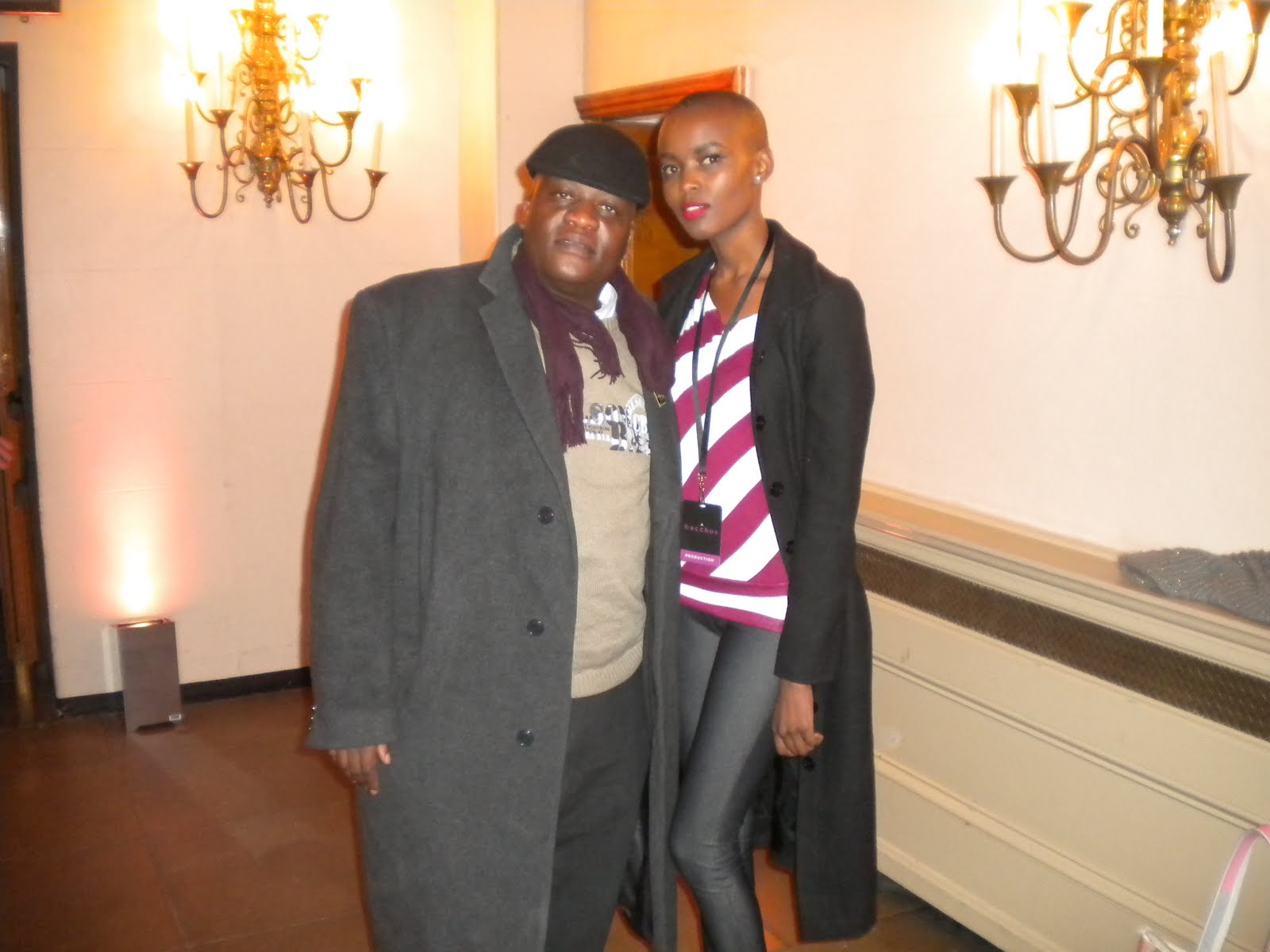
THE DAY THE NIGERIA TOURISM DEVELOPMENT AGENCY WAS AWARDED IN LONDON


U.S. Response to Declaration of Famine in Somalia and Drought in the Horn of Africa


Press Statement
Hillary Rodham Clinton
Secretary of StateWashington, DC

July 20, 2011


--------------------------------------------------------------------------------


The United States is deeply concerned by the humanitarian emergency in the Horn of Africa and today’s announcement by the United Nations that a famine is underway in parts of Somalia. The United States is the largest bilateral donor of emergency assistance to the eastern Horn of Africa. We have already responded with over $431 million in food and non-food emergency assistance this year alone.

But it is not enough -- the need is only expected to increase and more must be done by the United States and the international community. That is why today the United States government is providing an additional $28 million in aid for people in Somalia and for Somali refugees in Kenya.

The eastern Horn of Africa is prone to chronic food insecurity which has been exacerbated by a two-year drought. Crops have dried up, livestock have died, and food prices have been skyrocketing. In Somalia, twenty years without a central government and the relentless terrorism by al-Shabaab against its own people has turned an already severe situation into a dire one that is only expected to get worse. Even so, we remain cautiously optimistic that al-Shabaab will permit unimpeded international assistance in famine struck areas.

The United States -- in close coordination with the international community -- is working to assist more than 11 million people in Djibouti, Ethiopia, Kenya, and Somalia, who are in dire need of assistance. To anticipate growing needs, the United States government has worked with our partners over the last year to pre-position food in the region, increase funding for early warning systems, and strengthen non-food assistance in the feeding, health, water and sanitation sectors. In addition to emergency assistance, this administration’s Feed the Future program is working to break the cycle of hunger once and for all by addressing the root causes of hunger and food insecurity through innovative agricultural advances.

But the United States cannot solve the crisis in the Horn alone. All donors in the international community must commit to taking additional steps to tackle both immediate assistance needs and strengthen capacity in the region to respond to future crises.


Wednesday, 20 July 2011


Happy Birthday Madiba ! You are an inspiration to us all.

Where ever you are in the world give support to Mandela Day www.mandeladay.com


Check out the video by Trenton and Free Radical, a humble tribute to the man who led our country to freedom. A percentage of sales of this track go towards the Nelson Mandela Children's Fund www.mandela-children.org.uk


Click on the image below to watch the video:


Private equity investing in Africa is set to be a key discussion point during David Cameron’s visit to Africa, with the UK Prime Minister having selected some of the industry’s senior figures to accompany him on the trip.

Rod Evison, the Commonwealth Development Corporation’s (CDC) managing director for Africa, who is also the group’s acting chief executive officer (CEO), has made the list, as has Aureos Capital’s chief executive officer, Sev Vettivetpillai. The prime minister has also taken with him Stephen King, investment partner at impact investment group Omidyar Network and serial venture capitalist Doug Richard. Other leading private equity professionals not mentioned on the official list are understood to also be supporting the tour.

The investors make up the prime ministers 25-man list of senior business officials that are expected to visit Nigeria and South Africa. Mr. Cameron is scheduled to attend business events to forge relationships between businesses and entrepreneurs, and bolster Britain’s business links with some of Africa’s fastest-growing economies. The tour is part of the UK government’s mandate to promote trade with emerging global economies.

“I think it is right for Britain to be engaged with Africa as a whole. There is a huge opportunity for trade, for growth, for jobs, including jobs at home in the UK,” said the Prime Minister at a press conference with South Africa’s president Jacob Zuma.

Financial services and mobile technology are set to dominate business talks on the tour, with almost half of the entourage made up of executives from the two sectors. Bob Diamond, Barclays’ CEO and Ian Powell, chairman and senior partner at PricewaterhouseCoopers are representing the financial services sector.Vincent Clancy, CEO at Turner and Townsend, Tim Cobbold, who heads De La Rue and Royal Mint’s top executive Adam Lawrence have also been included on the financial services list.

The mobile technology sector is being represented by Vodafone’s CEO Vittorio Colao, Frontline SMS founder Ken Banks, Monitise’s co-founder Alastair Lukies and David Rowan Wired Magazine’s editor. Frontline SMS is one of Omidyar’s portfolio companies.

The prime minister is also pushing for the removal of regional trade barriers, as he believes pan-continental trade and concrete agreements will help transform Africa’s business potential. Mr. Cameron said that an African free trade area could increase gross domestic product (GDP) across the continent by about $62billion a year.

“Despite recent strong economic growth in Africa, today just 12% of African trade is with other African countries,” wrote Mr. Cameron in a Business Day article. “For much of the continent it is easier to trade with Europe or America than it is to trade with a neighbour.”

The prime minister is supported on the tour by UK Secretary of State for International Development Andrew Mitchell, who has also been campaigning for UK business to tap Africa for growth. Mr. Mitchell said in a speech last week that as a single market of one billion people, Africa could rival China or India. He added that 20 African companies can now lay claim to revenues of at least $3 billion, while small and medium-sized African businesses are seeking new openings.

“If you’re not there at all, or haven’t gone beyond the propaganda that says all Africa is corrupt, unstable and unsafe, then – well, you’re missing out altogether,” he said to businesses in a speech at the London School of Economics.

He added that African continent has six of the 10 fastest growing economies, globally, with growth exceeding the OECD, Latin America, Eastern Europe and the Middle East. Mr. Mitchell expects about five of Africa’s major cities to each have a household spending that will rival Mumbai by 2020.

“As I say, it is a moment of choice,” he said. “Scratch beneath the surface, go beyond CSR, and make a healthy profit for your shareholders while also creating lasting improvements for poor people or allow your company’s performance to be compromised so that it never reaches its full potential.”

Tuesday, 19 July 2011

WESTMISTER TODAY:This is how it was when Rupert Muddoch and James Muddoch and Rebbeca Brooks were giving evidence to a parliamentary committee

Rupert Murdoch has said he cannot be held responsible for the scandal at the News of the World, saying he was let down by "people I trusted".

The News Corp boss said he was not aware of the extent of phone hacking there and had "clearly" been misled by some of his staff.

But he said he was "humbled" to have to explain his firm's conduct to MPs


His son James apologised to victims, saying hacking was "inexcusable" and a "matter of great regret".

Rupert Murdoch's appearance before the Commons media committee is the first time he has faced direct scrutiny by MPs during his 40-year media UK career.

Faced with a series of questions from Labour MP Tom Watson, Mr Murdoch paused extensively and his son James made several attempts to intervene.

However. Mr Watson made clear that he wanted to hear answers from the father - whose wife Wendy was in the audience - and not the son.

He added: "Your father is responsible for corporate governance and serious wrongdoing has been brought about in the company.

"It is revealing in itself what he does not know and what executives chose not to tell him."


Rupert Murdoch said his questioning by MPs - which are investigating alleged criminal behaviour at the News of the World and what senior executives knew - was the "most humble day of my life".

The News Corp boss said he was not aware of the extent of phone hacking at the company until earlier this year when it handed over new information to the police - triggering a new inquiry


"I was absolutely shocked, appalled and ashamed when I heard about the Milly Dowler case two weeks ago," he told MPs.

Arguing that he ran a global business of 53,000 people and the paper was "just 1%" of this, he said he was not ultimately responsible for what went at the News of the World.


Asked who was responsible for this he said: "The people I trusted to run it and maybe the people they trusted".

Mr Murdoch said he was focused on his US newspaper interests and that he had "perhaps lost sight" of what was going on at the paper, saying he spoke to the editor "very seldom".

James Murdoch, chairman of News International, said the firm failed to live up to "the standards they aspired to" and was "determined to put things right and make sure they do not happen again".


He added: "I would like to say just how sorry I am and how sorry we are to particularly the victims of illegal voicemail interceptions and to their families."


The two men are being questioned about what they knew about phone hacking at the News of the World and whether MPs and the police were misled about the extent of it.

Rupert Murdoch said he had not been made aware by News International management of out-of-court settlements made to a handful of victims of hacking.

James Murdoch said he was "surprised and shocked" to learn that News International was still paying the legal fees of Glenn Mulcaire - the private investigator jailed for phone hacking in 2006 - while his father said he would like to end this arrangement


In other developments:

A post-mortem is being carried out on the body of former NoW reporter Sean Hoare who was found dead on Monday
The Met Police's public affairs director Dick Fedorcio tells MPs 10 out of 45 members of his department had once worked for the News of the World
Police are examining a laptop and paperwork found in a bin near the London home of Mrs Brooks, items believed to belong to her husband
David Cameron is to return to the UK - cutting short a trip to Africa - to prepare for a Commons debate on the hacking scandal on Wednesday


Asked by MPs about the closure of the News of the World, Rupert Murdoch said this was necessary since it had "lost the trust" of the people after recent allegations and was not done for commercial reasons.

One of the reasons he had been forced to withdraw his bid to take full control of BSkyB, he added, was that its competitors had "caught us with dirty hands and created hysteria".

On his relationships with senior British politicians, he said he had been asked to No 10 "for a cup of tea" by David Cameron shortly after he entered Downing Street as a recognition of his support for the Conservatives before the election.


He said he had been asked to enter Downing Street by the back door - both by Mr Cameron and former prime minister Gordon Brown - because it would attract less attention


The Murdochs initially declined to appear before the committee but changed their minds after they were issued with a summons to attend.

Opening the hearing, culture, media and sport committee chairman John Whittingdale said abuses had been uncovered "which had shocked and angered the country" and it was clear Parliament had been misled by News International staff.


Facing questions from MPs earlier, Met Commissioner Sir Paul Stephenson denied any impropriety in the hiring of former News of the World journalist Neil Wallis to provide media support to the police force but said he now regretted the appointment.


Mr Wallis was recently arrested as part of the phone-hacking inquiry.

Sir Paul, who quit on Sunday amid criticism of his force's handling of the phone-hacking saga, also denied "taking a swipe" in his resignation letter at David Cameron's decision to employ Andy Coulson - Mr Wallis' ex-boss - as an aide.


International Development Committee question DFID, MOJ, The Serious Fraud office and BAE Systems on Financial Crime

On Tuesday 19 July 2011, Committee Room 8, The Palace of Westminster, the Committee took evidence from:

At 10.00


Philip Bramwell, Group General Counsel, BAE Systems PLC
Bob Keen, Head of Government Relations, BAE Systems PLC
Lord Cairns, Independent Chair, BAE Systems PLC Advisory Board on Tanzania
At 10.45

Richard Alderman, Director, Serious Fraud Office
At 11.30

Rt Hon Alan Duncan, Minister of State, Department for International Development
Rt Hon Lord McNally, Minister of State, Ministry of Justice
Phil Mason, Head, Anti- Corruption, Department for International Development
Joy Hutcheon, Acting Director General, Department for International Development
Tim Jewell, Deputy Director, Criminal Law Team, Legal Directorate, Ministry of Justice

Tanzania PMs John Cheyo, Mussa Zungu, amd Mrs Kariuki and Hugh Bailey


This is a one-off evidence session with two broad aims.

The first and second panels examined the background to the agreement between BAE Systems and the Serious Fraud Office arising from the criminal offence of improper book keeping, which BAE Systems admitted in connection with the sale of a military Air Traffic Control system to the government of Tanzania. The panels will also address the issue of how the people of Tanzania will benefit from the reparations that BAE Systems has agreed to pay.


The third panel will examined the BAE Systems and Tanzania case as well as whether the case allows any general lessons to be drawn about how best to combat financial crimes, including bribery, in developing countries.

The session will also look at the working of the Bribery Act and the Government’s guidance.

HomeMagazinesInside Politics Inside Politics

‘Utoda has no capacity to manage public transport in Kampala’

Kampala Capital City Authority is facing the gigantic challenge of changing Kampala into a modern city. To attain that, the Authority has to deal with pertinent issues such as garbage collection, clearing drainage channels, destroying unplanned structures, and streamlining business in the he city. But most importantly, KCCA has tore-organise the public transport sector in and around the city. Risdel Kasasira, had an exclusive interview with Kampala Lord Mayor Erias Lukwago, especially on his plans to turn around the chaotic city transport system to normalcy. Excerpts:-


Why do you want Utoda out of managing public transport in Kampala?
They claim to have built an empire on an image of all-embracing Movement kind of system involving all taxi drivers, taxi owners, operators and everybody in this sector. But this is fiction. They have been thriving on blackmail, political patronage from big shots in government and some other individuals. They came emerged as a result of the need to have a clear policy on public transport following the collapse of Uganda Transporters Corporation and Uganda Railways. There has been a big vacuum in public transport. And the government simply said the provision of public transport is the function of Kampala Capital City Authority. And it appears KCC had no capacity. It’s not easy to manage public transport in the city. Coupled with the rot in KCC, there was a breakdown of the system which Utoda exploited. That is why you see a total breakdown of order the public transport sector. It has now turned out to be lucrative business for only some individuals who do care much about service delivery. Theirs is about how they can maximise revenue collection. They have also been playing political games and in some cases blackmail. It is not even that they genuinely support the NRM like they have been saying. They blackmail the President and everybody else. They claim to be NRM pillars in Kampala but this not true.

Who are these government shots? Secondly, there are reports that you are fighting Utoda because it is seen as an organisation that supports the ruling party?
In the first place, they are not supposed to be supporting any political party. If they are service providers, why are they partisan? How can a company be partisan? How can I say that MTN is NRM or Sunday Monitor is DP? No, no, no! The day you say that, then you have lost it. It is a minus on them to say I am witch-hunting them because they are NRM. That is the blackmail I am talking about. Section 11(e) of the law that establishes the city authority says I am the head of the authority, and I am supposed to come up with strategies and policies to develop the city. That is where my leadership is focusing now. When it comes to solid waste management, public transport, drainage system, infrastructure, health and education, that is what I am supposed to be doing as the Lord Mayor. We need to ask, what’s our policy on public transport? Are we emphasising matatus, buses? or boda bodas? When shall we develop a railway system? This is my vision. It is beyond this simple rhetoric and politics of Utoda.

Do you think you will achieve your plans with the internal fighting between you and the Executive Director of the Authority?
What matters in leadership is compliance with the will of the people. What are the aspirations of the people? They want the current leadership to turn around the city. They want drastic changes in Kampala so that we can have a modern city. That is why there is good will and huge support of the people in Kampala. I would be disillusioned if people were telling me to remain with the status quo. There is huge public outcry on the way public transport is being managed. This strong empire of Utoda built in the minds of people is crumbling and that gives me hope that I will succeed.

You may be having support of the people in Kampala but do you have the legal instrument to back you to break this empire you are talking about?
The powers given to the Authority which I head, are enough to back me in all this. What I wanted to do is to involve every stakeholder. That is why I had to go into consultative meetings with various people. I am happy we have agreed and I was given a green light to go ahead design a policy for Kampala. We have seen people who are given contracts to collect garbage do shoddy work - Auditor General raises questions and they get away with it. On paper, there is accountability, but on the ground nothing is done. Money is collected from people, drainage is blocked and no- work- done on ground. We must break that cycle and I have the will to exactly that. Before I came in, people were saying I won’t caution Utoda. Let me tell you - Utoda has no capacity to manage public transport in Kampala. There is no way we can divorce KCCA and the central government from public transport sector. The government has relegated this sector entirely to Utoda. If you asked our government about how many taxis we have in Kampala, they will not give you an answer. Even the Bureau of Statistics doe not know the number of boda bodas we have.

The previous mayors, including Mr Nasser Sebaggala, started with vigour like you but after sometime, they went silent. How sure are we that you will be different?
I think you are not correct. None of my predecessors has ever come out with stern action. Mr Sebaggala talked but when he assumed office, there is no single day he came out to take action against Utoda. It is true he criticised Utoda during his campaigns but immediately he entered office, he kept quiet until he left office without even proposing an increment of remittances. The contract signed by Mr SsebanaKizito (Sebaggala’s predecessor), was signed in October 2005 and was supposed to end in October 2010. They were [Utoda] supposed to pay Shs290million to KCC every month. Mr Sebaggala never even revised this. In 2005, you pay Shs290 millions and in 2009, you pay the same amount? No, no. And against how much have they been collecting? He could not even raise a finger about this. This is huge thuggery.

Could you be having figures on how much Utoda collects every month and what percentage of the collection is supposed to go to KCCA?
That is the problem we have. We do not know how much they collect. You can only get this information by looking at the books of accounts and that is why when I wrote to them, I asked them to bring their books of accounts. That is when they went up in arms and saying that was a no-go area for me. Utoda talks of having 7,000 taxis in Kampala but our investigations put the figure at more than 12,000. Utoda potentially collects between Shs2 billion and Shs4 billion every month.
Our consultant did this. They refuted the figure and we told them to bring their records but they are refusing to do that. The Executive Director is saying I should not ask for this. They say Utoda is a company limited by guarantee. I am a lawyer and I know that a company limited by guarantee is not supposed to do business. How do you do business with us when you are registered as a NGO? I have never seen where an estate manager can refuse to give the figures of the money collected to the owner. The public transport is the function of KCCA. It is our revenue base and Utoda is supposed to be our commission agent.

What is the way forward and where do you go from here?
I am going to work out a programme to summon Utoda and other service providers in the city and discuss number of issues.

rkasasira@ug.nationmedia.com

Monday, 18 July 2011

PRESS RELEASE

Issued: 15/07/11


“Interview with Ambassador of Eritrea”

On Tuesday 12th of July 2011, H.E Tesfamicael Gerahtu, came to the Ben TV studio to be interviewed by Mr Ayoub Mzee. During his interview, the Ambassador of the State of Eritrea talked about a range of issues on the country including the economy, drought, involvement with Sudan and issues of democracy.

Economy
On the economy, H.E Gerahtu believes that there was no choice but for the country to start from the beginning but explains that “building Eritrea from scratch was not easy”, something he attributes to factors such as political agendas. Despite the setbacks however, the Ambassador believes that the current economic situation is very positive due to efforts made by the government. When asked about why the country has been reluctant to accept outside loans, the Ambassador was quick to assert their stance.

“We do take loans but it has to be balanced but we prefer foreign investments” stated H.E Gerahtu. The reason for this preference has been attributed to the fact that investments create employment and capital.

Drought
The Ambassador was positive about the current drought situation in Eritrea. According to him, there have been efforts to promote soil and water which have been redoubled since 2010. He is stated his confidence over the country sustaining growth.

Involvement with Sudan
When asked his view on the allegations that the Eritrea has been involved in the destabilisation of Southern Sudan, the Ambassador regarded it as “fabrication”. In his view, nation building should not be about the politics of ethnicity and race and Sudan should take Eritrea as an example of a country which has diversity.

Issues of Democracy
Whilst discussing the issue of democracy in Eritrea, H.E Gerahtu explained that democracy is not just about elections of parties. To him, it is also about “responsible participation and the empowerment of people”. However, the Ambassador believes that for this to happen the country needs to take a “bottom up approach”.
“We are in the early stages but we are on the right path” The Ambassador assured.

It is believed that regional assemblies have already been established in six regions of Eritrea and according to H.E Gerahtu, national elections will one day eventually take place.

The Future of Eritrea
The interview ended with what the Ambassador felt the future would bring for Eritrea. In his eyes, the last twenty years have been a challenge for the country, citing examples such as sanctions on Eritrea. Nevertheless, the Ambassador was optimistic for the future with nation building being one of the key priorities. This is something he believed would require perseverance.

##ENDS##
Ayoub mzee with Flavia matata a Tanzania born international model


The world Travel market


Uganda stand


Nigeria stand


uganda stand


uganda stand


tanzania stand


FINAL NOTIFICATION OF DATES, PROCESSES, TIMELINES AND GUIDELINES FOR ELECTIONS INTO THE EXECUTIVE COMMITTEE

_____________________


A. The following correspondence and related documents is\are being communicated and released on behalf of the Electoral Committee. Further to previous correspondence dated 3rd June 2011, please find attached three documents as follows:


I. Timeline and Guidelines for the Elections in the attached document named NIDOE_UK_ELECTION_2011_Timelines_and_Guidelines


II. The Candidacy Nomination Form in the attached document named NIDOE_UK_ELECTION_2011_Nomination_Form and


III. Chapter Membership Application Form in the attached document named NIDOE_ApplicationForm_Final


B. Please also be advised of the following important notices:


1. DATE OF ELECTIONS – SATURDAY 6th AUGUST 2011

The Electoral Committee has decided to move the date of election to Saturday 6th August 2011. Rationale for the decision is provided in the text of the decision that follows:


" The Nig High Commission has said that they are using their premises for exams on the 30th July so we have been constrained to move the elections by one week to the next available Saturday which is the 6th August. Please read the attached guidelines and timelines carefully to ensure we have a hitch free election."


2. REPRESENTATIONS AND SUBMMISSIONS RECIEVED

The Electoral Committee have taken on board the various representations by email and have as far as possible incorporated these into our decisions.


3. FURTHER ACTIONS

Further actions, events and submissions will be guided by the instructions contained within the attached documents. Please read these carefully ensuing that members abide by the set processes, deadlines and expectations spelt out in the correspondence.


_____________________


We thank you all in advance for your continuing support and look forward to a credible and successful transition.


Sincerely Yours,


Chapter Executive Committee

for\on behalf of the Electoral Committee

17.07.11


Sunday, 17 July 2011

VIJANA WA MADRASSA IKHLAS -WILLENHALL -COVENTRY UK WAKIFANYA MAONYESHO


What is Community Cohesion?
Community Cohesion is what must happen in all communities to help different groups of people get on well together through the integration of new and existing residents. This is excatly , what the Tanzania High commissioner in London H.E PETER KALLAGHE with his Madam were doing at the Tanzania Diaspora event

The Tanzania mission's vision of an integrated and cohesive community is based on three foundations:

■People from different backgrounds having similar life opportunities in the Diaspora
■People knowing their rights and responsibilities
■People trusting one another

And three key ways of living together:
■A shared future vision and sense of belonging
■A focus on what new and existing communities have in common, alongside a recognition of the value of diversity
■Strong and positive relationships between people from different backgrounds


The Tanzania High commissioner H.E PETER KALLAGHE with his wife opening the dance at the Tanzania Diaspora come together in London


A NEW ERA IN SOUTH SUDAN


Saturday, 16 July 2011


MEET H.E. Mr. Edward M. Turay -Sierra Leone High Commissioner

UK and Northern Ireland


A Barrister by profession, studied in England, called to the Bar by Lincoln’s Inn in 1976, practised in Jamaica for a while, Returned home to Sierra Leone in 1979 and Served as a Magistrate for three years. Then joined politics in 1982. In 1986 won a seat as a Member of Parliament for Bombali Central one Constituency.

He held the seat up to January 2010. During this period His Excellency has served as the Secretary General of the ruling APC party. Then Minority Leader of the House of Parliament from 1996 to 2002, after he contested for the Presidency and lost in 1996. In 2007 appointed Leader of the Majority party in the Parliament and Leader of Government Business, until January 2010 when he was appointed Sierra Leone’s High Commissioner to the United Kingdom and Northern Ireland, and accredited to eight other states – namely Cyprus, Ireland, Spain, Portugal, Norway, Denmark, Sweden and Greece.

He has served in almost all Parliamentary Committees either as Chairman or a Member and was the Chairman for the Judicial Committee for over ten years. He is the Founder and Consultant of Eddie Turay & Associates, a leading Law Firm in Freetown, Sierra Leone.


Secretary Clinton hosts 2011 International Women of Courage Awards ceremony in commemoration of the 100th Anniversary of International Women’s Day. Pictured with her are First Lady Michelle Obama and the honorees. State Department photo by Michael Gross.

Friday, 15 July 2011

Secretary Clinton hosts 2011 International Women of Courage Awards ceremony in commemoration of the 100th Anniversary of International Women’s Day. Pictured with her are First Lady Michelle Obama and the honorees. State Department photo by Michael Gross.