Haya wadau wa Uingereza Bongoland II inakuja mwezi ujao wa Oktobatarehe 30 saa mbili .
Pata habari kamili hapa . Bongoland IIimechaguliwa katika sinema za Kiafrika ambazo zitaonyeshwa Uingerezatangu October 23 Mpaka November 2, 2008 -http://www.africa- in-motion. org.uk/ Kama uko Edinburgh au mitaa ya karibu unaombwa ujitahidi kuwakilishaTanzania na ujionee mwenyewe jinsi wasanii wa ki-Tanzaniawalivyotuwakilisha katika ngazi za kimataifa. Kuhudhuria kwakokutaonyesha waandalizi wa festival hii kuwa wadau na marafiki zao wanania ya kutaka sinema za kwao zionyeshwe katika festival kama hizi.Kama hutaweza kuudhuria siku hiyo, unaombwa kupitisha ujumbe huu kwamarafiki wote walio karibu na mji wa Edinburgh.Kwa sasa sinema hii inapatikana katika DVD. Unaweza ukaagiza mtandaonikwa kubofya hapa. Kumbuka kuwa wengi wetu kwa mara nyingi tuna-rentsinema kutoka Hollywood videos au Blockbusters. Tukumbuke kuwaku-renti kwetu kunachangia katika kuendelea kutengeneza sinema nyingiza K imarekani. Ni kwa sababu hiyo hiyo na sisi tujitahidi kuwaungamkono wasanii wa Kibongo ili fani hii iendelee kukua ili utamaduniwetu nao uwakilishwe katika ngazi zaidi nje20ya Bongo.Kwa habri zaidi kuhusu sinema hii au sinema nyingine kutoka K ibiraFilms tafadhali bofya hapa.-- Regards,-----Temu, A.B.S.Edinburgh(+44 7766176244)


Monday, 22 September 2008

Conservatives.TV
Conservatives.TV has been upgraded to bring you more behind-the-scenes footage, along with video profiles of Conservatives from around the UK.
Go to Conservatives.TV
We hope you enjoy the new conservatives.com. Remember, we will be broadcasting all the main Conference sessions as well as the Conference Extra events live, so even if you're not going to Birmingham you can still catch all the action.
There will also be plenty of backstage footage and exclusive blog posts, so make sure to check in regularly to keep up to date with Conference '08.


Friday, 19 September 2008
SACOMA BUSSINESS INCUBATION LAUNCH
A bussiness incubation program run by SAHARA COMMUNITIES ABROAD was launched yesterday at the Kenya High commission London

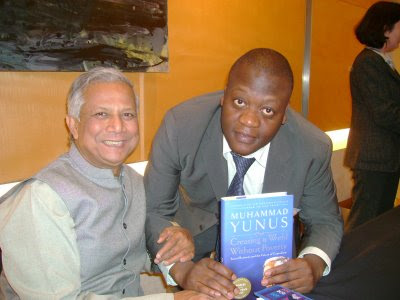
Ayoub mzee with Prez Ochieng -CEO SACOMA
To empower, inform and educate members of the Kiswahili community to enable them to overcome disadvantage and social exclusion and effectively participate in the social and economic regeneration of marginalized communities in the UK.

SACOMA’s core service is the provision of Information Advice and Guidance (IAG), and support through outreach, awareness creation, workforce development and enterprise.

The IAG service is developing into a specialised service to accommodate and engage the sensitivities of the hard to reach communities facing considerable barriers to allowing them to access available services to allow for their personal development.

Sacoma is interested in supporting the African migrant and BAME community into rewarding and sustainable life where they are empowered and know where to seek for further help by providing an IAG service which empowers beneficiaries to engage successfully with the mainstream service and the economic activities


SACOMA was established in 2000 to support Kiswahili speaking communities from Sub-Saharan Africa living in the UK, many of whom are experiencing disadvantage, such as poverty, social isolation and discrimination.

Ayoub mzee with Prez Ochieng -CEO SACOMA
To empower, inform and educate members of the Kiswahili community to enable them to overcome disadvantage and social exclusion and effectively participate in the social and economic regeneration of marginalized communities in the UK.
ethiopia

Dear Friends,
Mr Ayodeji Omotade asked us to let everyone know that his trial has been adjourned – no date yet. He sends his heartfelt thanks everyone who wrote messages of support.
The protest at BA’s headquarters tomorrow Wednesday 17 September is continuing as planned (see below).
We will keep everyone updated.
If opposing violence is a crime,
we are all on trial
Support Mr Ayodeji Omotade!
Peaceful protest
12 noon, WE D N ES D A Y 17 SEP T EM BE R, 2008
BRI T ISH AIRWAYS PLC,
Waterside (H A A 3) Harmondsworth UB7 0 G B
More details: Respect Nigerians Coalition: http://www.respectnigerians.com/BoycottBA.pdf www.respectnigerians.com and www.nigeriavillagesquare.com
All A frican Women's G roup: centre@crossroadswomen.net
Women of Colour, G WS: womenofcolour@allwomencount.net T el: 020 7482 2496
An attack on Ethiopia emerging in the US Senate’s Foreign Relations Committee
· Ethiopia enjoys healthy relations with the United States of America . A long historical relationship has, in recent times, witnessed qualitative improvement as issues linking us have multiplied. Nonetheless, there have been frequent challenges to our friendly relations. The annual report from the US State Department on human rights around the world has never attempted any objective assessment of Ethiopia , making sweeping and unsubstantiated allegations against the Government. However, the Government of Ethiopia has never considered the reports as any major impediment to the US/Ethiopia relationship despite their lack of objectivity and the excuse they create for others less knowledgeable about the realities of the situation in Ethiopia . In this regard the efforts by one branch of the US Government, Congress, have gone well beyond this. Following numerous hearings which have seldom been constructive the House of Representatives passed an ‘Ethiopian Democracy and Accountability Act of 2007’. Now a ‘Support for Democracy and Human Rights in Ethiopia Act of 2008’ has been introduced in the Senate. This draft is of concern because it makes no effort to provide any context for criticism. Moreover, the timing is bewildering with Congress about to close in order to participate in the Presidential elections. It is a surprise to find that this issue is of such interest to members of Congress at this stage in the life of the present Congress. This is particularly so in light of what the Chairman of the Senate Foreign Relations Committee himself says about the critical role Ethiopia plays in the sub-region. This draft bill is regrettable not just because of factual errors, which are numerous, or the lack of accurate information portrayed, but because the message is that Ethiopia, despite its friendship with the US, can still be dictated to simply because there will be no consequences for the US. It is disingenuous to couch such a bill in friendly terms with claims to support democracy in Ethiopia when no such bill would be introduced against other governments regarded as friends of the US . Ethiopia is being targeted with complete disregard for building the mutual trust between the two countries so vital for long-term Ethiopia/US relations.
Ethiopia’s New Year hopes for regional peace
· While the Ethiopian New Year 2001 provides renewed commitment to forge ahead with the impressive economic development registered over the past five years, and with the democratization process, there is no doubt that a great deal remains to be done to ensure durable peace in the region. One critical aspect of this remains the situation between Ethiopia and Eritrea . For Ethiopia , this situation could easily have been resolved previously on the basis of the two components of the Algiers Agreement. The first, the Agreement on Cessation of Hostilities signed on June 18, 2000, at Algiers , provided for the deployment of a peacekeeping mission with the detailed mandate to create a Temporary Security Zone and for punitive measures to be taken under Chapter VII of the United Nations Charter should either party violate this agreement which were meant “..to contribute to the reduction of tension and to the establishment of a climate of calm and confidence, as well as to create conditions conducive to a comprehensive and lasting settlement of the conflict…” The peace settlement as concluded under the Algiers Agreement of December 2000, included the delimitation and demarcation of the border based on pertinent colonial treaties and applicable international law, and allowed for the establishment of a neutral Claims Commission “...to decide through binding arbitration all claims for loss, damage or injury by one Government against the other, and by [their] nationals…”. The expectation was for Algiers Agreements to be implemented in synergy and provide a conclusive settlement of the dispute. The various elements of the Agreements have been gradually implemented in different ways. The Claims Commission, for example, has completed the liability stage and is now expected to detail its compensation awards. One of its most significant decisions was its finding that Eritrea violated Article 2(4) of the United Nations Charter when it invaded areas peacefully administered by Ethiopia . On the other hand, the Boundary Commission adopted its delimitation decision in 2002; implementation, however, could not proceed because Eritrea did not want to proceed to demarcation in line with international practice.
This stalled the peace process for some time before Ethiopia produced its five-point Peace Plan whose fundamentals were: the proposal to resolve the dispute between Ethiopia and Eritrea only through peaceful means; to resolve the root causes of the conflict through dialogue with the view to normalizing relations between the two countries; to accept, in principle, the Ethiopia-Eritrea Boundary Commission decision; and to start dialogue immediately with the view to implementing the Ethiopia-Eritrea Boundary Commission’s decision in a manner consistent with the promotion of sustainable peace and brotherly ties between the two peoples. Eritrea not only rejected these proposals but responded by imposing restrictions on UNMEE, expelling certain nationals serving in UNMEE, and by deploying its own military in the TSZ. At the request of the Security Council, the then Secretary General tried to unlock the dispute by appointing a Special Envoy. Eritrea rejected the appointment and refused to receive the envoy. The Security Council passed resolution 1640(2005) threatening Eritrea with sanctions if it did not lift the restrictions it had imposed on UNMEE. With the Security Council expected to consider the possibility of sanctions on Eritrea following the Report of the Secretary General, the Witnesses to the Algiers Agreement then convened in New York at the invitation of the United States to adopt an initiative aimed at breaking the impasse. The Security Council supported this and called on the Boundary Commission to re-convene meetings with the two parties. The Commission resumed its work on 10 March 2006 when Ethiopia clarified its stance that its acceptance of the delimitation decision was without any precondition, a point the Commission fully and publicly acknowledged. Eritrea , however, then made it clear that it would no longer cooperate with the Commission. Indeed, this initiative failed to break the impasse in the peace process because Eritrea refused to lift restrictions on UNMEE or cooperate in the appointment of a neutral facilitator to assist in the demarcation process and enter into technical discussion with Ethiopia as the Witnesses had highlighted in their initiative. Eritrea ’s persistent rejection of all avenues for peace effectively blocked the possibilities of a legally valid demarcation process. Faced by this intransigence, the Boundary Commission sought a way out by suggesting ‘virtual’ demarcation in lieu of physical demarcation.
Ethiopia made it clear that this course of action could only be considered ultra vires and that Ethiopia was not obligated to accept it. Indeed, the Security Council in fact subsequently adopted resolution 1798(2008) demanding physical demarcation of the boundary, making it clear that any transfer of territorial control could only arise after “…the final status of the contested areas… will be determined at the end of the delimitation and demarcation of the border and, if need be, through an appropriate mechanism of arbitration”, pursuant to the Algiers Agreements. So the questions of sovereignty and occupation that Eritrea has raised remain irrelevant, even frivolous, in the absence of valid demarcation and a transfer of territory in accordance with this.
Rather than respond to any of the criticisms and demands from the Security Council, Eritrea actually intensified the severe restrictions it imposed on UNMEE. This led to the Security Council’s termination of UNMEE’s mandate. Unfortunately, Eritrea, after starting the war unlawfully, being found liable for this by the Claims Commission, meting out humiliating treatment to UNMEE, violating the Cessation of Hostilities Agreement by deploying military forces inside the TSZ, continuously threatening to use force and carrying out multiple efforts at destabilization in the region, has gone unpunished. Verbal condemnation by the Security Council, in the absence of any punitive measures under the Charter of the United Nations or the Agreement on Cessation of Hostilities, has emboldened Eritrea to remain defiant to all the Council’s numerous resolutions demanding responses from Eritrea . In this context, it should be noted that in terminating UNMEE’s mandate, the Security Council, in resolution 1827(2008), reaffirmed the integrity of the TSZ. Under the Algiers Agreements, the TSZ and UNMEE’s mandate end only when valid demarcation has been conducted in accordance with the Agreements and international law.
Now, of course, all this is behind us and the problem is no longer an issue of the technicalities of boundary demarcation. Eritrea , with its persistent efforts to destabilize Ethiopia has made it clear that it is not prepared to reach any accommodation with the present government of Ethiopia . In fact this is not something new. It has been the main problem from the beginning. Despite this, in this New Year, Ethiopia will maintain its firm intention to achieve a peaceful resolution of the dispute with Eritrea . It remains fully committed to a lasting and durable peace between the two countries through negotiation and discussion. It can only hope Eritrea will reciprocate
Thursday, 18 September 2008
idd el fitr

The Heart of Africa. Interview with Julius Nyerere on Anti-Colonialism
New Internationalist Magazine, issue 309, January-February 1999
[In recognition of Nyerere's passing, I present his last great interview]
The first issue of The Internationalist in 1970 had as its cover story an interview with President Julius Nyerere of Tanzania, then at the very centre of the new movement for world development.
Three decades on, Nyerere is, Mandela aside, Africa's most respected elder statesperson, still active in attempts to resolve the current conflicts in Burundi and DR Congo.
No-one is better placed to look back on the anti-colonial century.
Ikaweba Bunting interviewed him for the NI.
IntroductionThe briefings and consultations at the Burundi peace negotiations in Arusha, Tanzania, had been going on all day. It was now seven in the evening and we had been at it non-stop for more than 12 hours. This was a tedious and demanding task, listening to each party go through their interpretation of history and presenting their case. There was a lot of repetition, political manoeuvring and tension. Patience was a most valuable asset.
I was beginning to feel the enormity of the task coupled with the strain of such an intense process - and all I had been doing was taking notes. So I knew that a 76-year-old man in the eye of the storm had to be exhausted. But he showed no sign of it.
The old man, Mwalimu Julius Nyerere - former President of Tanzania and one of Africa's most revered twentieth-century leaders - had been asked by the Organization of African Unity to act as Facilitator, getting the warring parties in Burundi to negotiate a political settlement. I remember that he had a studied reluctance before accepting the task. But since he undertook the work he has never shown a trace of doubt that a negotiated and equitable peace would be achieved. And, as the conflict in the Democratic Republic of the Congo (DRC) evolves, overtures are being made to involve him in seeking a political solution - he is felt to be the only person who could talk to all sides involved in the conflict and to whom they might all listen.
Now, at the end of this exhausting day, a discussion began on the current war in the DRC. Mwalimu became animated. He began to elaborate on the political implications of the wars in the Great Lakes region of Central Africa (see special feature on the Great Lakes: http://www.oneworld.org/ni/chronicle98/special.htm#lakes ).
He was very disturbed by the growing belligerence of the countries involved and the increase in mass murders. He expressed particular concern about the persecution of the Batutsi based on the mythical racial theory that categorizes them as Hamitic, Caucasian black people who must be exterminated because of their sinister plans to rule Africa. He said he felt a tinge of embarrassment because he had boasted only months earlier that Africa was entering a new era and managing its own problems. `Now the stupidity of fighting over this big forest is going to set us back. Mobutu always gave us problems but we never fought over the Congo.'
Some of the senior members of the team begged their leave but I stayed, soaking up as much as I could, aware that moments like these are jewels to be treasured. Finally he exclaimed: `We are going to have to think about this some more and consider what can be done to stop this awful killing and get some kind of peace in our region.' I could tell by his tone and body language that this meant `good night'. As I was leaving, Mwalimu - the word means `teacher' and has been Nyerere's respectful title among Tanzanians for decades - called me back to say: `You have to get your Pan-African Working Group together and start tackling this problem; let's arrange another meeting.'
It has been my privilege to be associated with Mwalimu Nyerere for the past 25 years. During a visit to Harlem, New York, in the late 1960s Mwalimu extended an invitation to Africans in the Diaspora to come to Tanzania and participate in building a socialist African state. I came over through a new organization called the Pan-African Skills project and have lived in Tanzania ever since, for a quarter of the century.
Nyerere's Tanzania was a magnet then for anti-colonial activists and thinkers from all over the world. Uganda's President Yoweri Museveni, for instance, was deeply influenced by his time as a student at the University of Dar-es-Salaam. Museveni belonged to a study group led by the Guyanan Walter Rodney, who wrote his seminal book How Europe Underdeveloped Africa while he was a professor there.
The University of Dar-es-Salaam became the centre for the guerrilla-intellectuals and activists of African liberation movements. FRELIMO of Mozambique, the ANC and PAC of South Africa, ZANU and ZAPU of Zimbabwe, the MPLA of Angola and SWAPO of Namibia all had offices and training camps in Tanzania. The country also gave safe haven to US civil-rights activists, Black Panther party-members and Vietnam War resisters.
It was an exciting place to be. Under a head of state who valued equal rights, justice and development more than the pomp and power of office, Tanzania was at the heart of the anti-colonial struggle.
Over the years I have often been able to sit with Mwalimu and reflect on Africa's struggles for self-determination and development. Now, in December 1998, prompted by the New Internationalist special issue on The Radical Twentieth Century, Mwalimu Nyerere and I sat down over two days at his home in Butiama, Tanzania, and reflected on his role over the past 50 years as an activist and statesperson in the anti-colonial cause.
Interview
Ikaweba Bunting (IB): What was the anti-colonial movement's greatest contribution to humanity?
Mwalimu Julius Nyerere (MJN): There are two fundamental things that the anti-colonial liberation movement contributed to humanity. The first is simply that the suffering of a whole chunk of human beings through the actions of others was halted. The arrogance of one group of people in lording it over the human race and exploiting the poorer peoples was challenged and discredited - and that was a positive contribution made by the liberation struggle to all humanity.
Second, the liberation movement was very moral. It was not simply liberation in a vacuum. Gandhi argued a moral case and so did I. Liberation freed white people also. Take South Africa: there, the anti-apartheid victory freed whites as well as black people.
IB: When did you first encounter the idea of liberation from colonialism?
MJN: I cannot say I encountered the idea of liberation in a totality like a flash of light. I did not have an experience like Paul on the road to Damascus. For me it was a process - something that grew inside of me. Our elders fought and were defeated by the Germans and the British. We were born under colonialism. Some of us never questioned it. Those who got educated began to think about it. What many of us went through was simply a desire to be accepted by the white man. At first this is what it was - a kind of inert dissatisfaction that we were not accepted as equals.
World War Two and what it was fought for - democracy and freedom - started the process for many people, especially those who were in the Army. For me the transformation came later. At Makerere in 1943 I started something called the Tanganyika African Welfare Association. Its main purpose was not political or anti-colonial. We wanted to improve the lives of Africans. But inside us something was happening.
I wrote an essay in 1944 called The Freedom of Women. I must be honest and say I was influenced by John Stuart Mill, who had written about the subjugation of women. My father had 22 wives and I knew how hard they had to work and what they went through as women. Here in this essay I was moving towards the idea of freedom theoretically. But I was still in the mindset of improving the lives and welfare of Africans: I went to Tabora to start teaching.
Then came Indian independence. The significance of India's independence movement was that it shook the British Empire. When Gandhi succeeded I think it made the British lose the will to cling to empire. But it was events in Ghana in 1949 that fundamentally changed my attitude. When Kwame Nkrumah was released from prison this produced a transformation. I was in Britain and oh you could see it in the Ghanaians! They became different human beings, different from all the rest of us! This thing of freedom began growing inside all of us. First India in 1947, then Ghana in 1949. Ghana became independent six years later. Under the influence of these events, while at university in Britain, I made up my mind to be a full- time political activist when I went back home. I intended to work for three years and then launch into politics. But it happened sooner than I planned.
[Note: Independence came in 1961, and Nyerere became President. Six years later, he issued the Arusha Declaration, which nailed Tanzania's colours firmly to the mast of socialism and self-reliance. The great Caribbean historian CLR James once called the Arusha Declaration `the highest stage of resistance ever reached by revolting Blacks'.]
IB: Does the Arusha Declaration still stand up today?
MJN: I still travel around with it. I read it over and over to see what I would change. Maybe I would improve on the Kiswahili that was used but the Declaration is still valid: I would not change a thing. Tanzania had been independent for a short time before we began to see a growing gap between the haves and the have-nots in our country. A privileged group was emerging from the political leaders and bureaucrats who had been poor under colonial rule but were now beginning to use their positions in the Party and the Government to enrich themselves. This kind of development would alienate the leadership from the people. So we articulated a new national objective: we stressed that development is about all our people and not just a small and privileged minority.
The Arusha Declaration was what made Tanzania distinctly Tanzania. We stated what we stood for, we laid down a code of conduct for our leaders and we made an effort to achieve our goals. This was obvious to all, even if we made mistakes - and when one tries anything new and uncharted there are bound to be mistakes.
The Arusha Declaration and our democratic single-party system, together with our national language, Kiswahili, and a highly politicized and disciplined national army, transformed more than 126 different tribes into a cohesive and stable nation.
However, despite this achievement, they say we failed in Tanzania, that we floundered. But did we? We must say no. We can't deny everything we accomplished. There are some of my friends who we did not allow to get rich; now they are getting rich and they say `See, we are getting rich now, so you were wrong'. But what kind of answer is that?
The floundering of socialism has been global. This is what needs an explanation, not just the Tanzanian part of it. George Bernard Shaw, who was an atheist, said, `You cannot say Christianity has failed because it has never been tried.' It is the same with socialism: you cannot say it has failed because it has never been tried.
IB: After independence you pursued an African socialism while in Kenya Jomo Kenyatta embraced a more conservative nationalism. The two of you came to symbolize opposing visions of development. Were you conscious at the time of the need to chart a different course that might inspire other new African nations?
MJN: Anti-colonialism was a nationalist movement. For me liberation and unity were the most important things. I have always said that I was African first and socialist second. I would rather see a free and united Africa before a fragmented socialist Africa. I did not preach socialism. I made this distinction deliberately so as not to divide the country. The majority in the anti-colonial struggle were nationalist. There was a minority who argued that class was the central issue, that white workers were as exploited as black workers by capitalism. They wanted to approach liberation in purely Marxist terms. However, in South Africa white workers oppressed black workers. It was more than class and I saw that.
Jomo Kenyatta was clearly capitalist and we were trying a different course. But I must confess I did not see myself as charting out something for the rest of Africa. One picks one's way. I never saw the contradictions that would prevent Kenya, Uganda and Tanzania from working together. I was na‹ve, I guess. Even now for me freedom and unity are paramount.
I respected Jomo (Kenyatta) immensely. It has probably never happened before in history. Two heads of state, Milton Obote [Uganda's leader] and I, went to Jomo and said to him: `let's unite our countries and you be our head of state'. He said no. I think he said no because it would have put him out of his element as a Kikuyu Elder.
IB: In 1990 you were quoted as saying that you thought the absence of an opposition party had contributed to the Tanzanian ruling party's abandonment of its commitments. Do you think it was a mistake for so many new African nations to opt for a one-party state?
MJN: I never advocated this for everyone. But I did for Tanzania because of our circumstances then. In 1990 the Chama Cha Mapinduzi (CCM) abandoned the one-party state for a multi-party system. But we do not have an opposition. The point I was making when I made the statement was that any party that stays in power too long becomes corrupt. The Communist Party in the Soviet Union, the CCM of Tanzania and the Conservative Party of Britain all stayed in power too long and became corrupt. This is especially so if the opposition is too weak or non-existent.
IB: What were your main mistakes as Tanzanian leader? What should you have done differently?
MJN: There are things that I would have done more firmly or not at all. For example, I would not nationalize the sisal plantations. This was a mistake. I did not realize how difficult it would be for the state to manage agriculture. Agriculture is difficult to socialize. I tried to tell my government that what was traditionally the family's in the village social organization should be left with the family, while what was new could be communalized at the village level. The land issue and family holdings were very sensitive. I saw this intellectually but it was hard to translate it into policy implementation. But I still think that in the end Tanzania will return to the values and basic principles of the Arusha Declaration.
IB: Why did your attempt to find a new way founder on the rocks?
MJN: I was in Washington last year. At the World Bank the first question they asked me was `how did you fail?' I responded that we took over a country with 85 per cent of its adult population illiterate. The British ruled us for 43 years. When they left, there were 2 trained engineers and 12 doctors. This is the country we inherited.
When I stepped down there was 91-per-cent literacy and nearly every child was in school. We trained thousands of engineers and doctors and teachers.
In 1988 Tanzania's per-capita income was $280. Now, in 1998, it is $140. So I asked the World Bank people what went wrong. Because for the last ten years Tanzania has been signing on the dotted line and doing everything the IMF and the World Bank wanted. Enrolment in school has plummeted to 63 per cent and conditions in health and other social services have deteriorated. I asked them again: `what went wrong?' These people just sat there looking at me. Then they asked what could they do? I told them have some humility. Humility - they are so arrogant!
IB: Do you think Third World independence actually suited the industrialized world, leaving it with the economic power but without the political responsibility?
MJN: It seems that independence of the former colonies has suited the interests of the industrial world for bigger profits at less cost. Independence made it cheaper for them to exploit us. We became neo-colonies. Some African leaders did not realize it. In fact many argued against Kwame (Nkrumah)'s idea of neo-colonialism.
The majority of countries in Africa and the rest of the South are hamstrung by debt, by the IMF. We have too much debt now. It is a heavy burden, a trap. It is debilitating. We must have a new chance. If we doubled our production and debt-servicing capabilities we would still have no money for anything extra like education or development. It is immoral. It is an affront. The conditions and policies of the World Bank and the IMF are to enable countries to pay debt not to develop. That is all! Let us argue the moral case. Let us create a new liberation movement to free us from immoral debt and neo-colonialism. This is one way forward. The other way is through Pan-African unity.
IB: Should African resistance movements have embraced Pan-Africanism more readily? Do you think we should be working now towards a federal United States of Africa?
MJN: Kwame Nkrumah and I were committed to the idea of unity. African leaders and heads of state did not take Kwame seriously. However, I did. I did not believe in these small little nations. Still today I do not believe in them. I tell our people to look at the European Union, at these people who ruled us who are now uniting.
Kwame and I met in 1963 and discussed African Unity. We differed on how to achieve a United States of Africa. But we both agreed on a United States of Africa as necessary. Kwame went to Lincoln University, a black college in the US. He perceived things from the perspective of US history, where the 13 colonies that revolted against the British formed a union. That is what he thought the OAU should do.
I tried to get East Africa to unite before independence. When we failed in this I was wary about Kwame's continental approach. We corresponded profusely on this. Kwame said my idea of `regionalization' was only balkanization on a larger scale. Later African historians will have to study our correspondence on this issue of uniting Africa.
Africans who studied in the US like Nkrumah and [Nigerian independence leader] Azikiwe were more aware of the Diaspora and the global African community than those of us who studied in Britain. They were therefore aware of a wider Pan-Africanism. Theirs was the aggressive Pan-Africanism of WEB Dubois and Marcus Garvey. The colonialists were against this and frightened of it.
After independence the wider African community became clear to me. I was concerned about education; the work of Booker T Washington resonated with me. There were skills we needed and black people outside Africa had them. I gave our US Ambassador the specific job of recruiting skilled Africans from the US Diaspora. A few came, like you. Some stayed; others left.
We should try to revive it. We should look to our brothers and sisters in the West. We should build the broader Pan-Africanism. There is still the room - and the need.
Ikaweba Bunting is currently Oxfam's Communications Officer for East Africa based in Nairobi. He also belongs to a Pan-African Working Group.
Copyright (c) 1999 New Internationalist. All Rights Reserved.
[Articles on BRC-NEWS may be forwarded and posted on other mailing lists/discussion forums, as long as proper attribution is given to the author and originating publication, and the wording is not altered in any way. In particular, if there is a reference to a web site where an article was originally located, please do *not* remove that.
Unless stated otherwise, do *not* publish or post the entire text of any copyrighted articles on web sites (web-based discussion forums exempted) or in print, without getting *explicit* permission from the article author or copyright holder. Check the fair use provisions of the copyright law in your country for details on what you can and can't do. As a courtesy, we'd appreciate it if you let folks know how to subscribe to BRC-NEWS, by leaving in the first two lines of the signature below.]
BRC-NEWS: Black Radical Congress - General News/Alerts/AnnouncementsSubscribe: Email "subscribe brc-news" to
New Zimbabwe cabinet
Note the positions Zanu-pf hold - Albert Weidemann.
MINISTRIES1. Defence -Hon. Sidney Sekeramayi ZANU PF2.
Home Affairs- Hon.Tendai Biti MDC T3. Finance - Hon. Tapiwa Mashakada MDC T4.
Foreign Affairs- Hon. Sen. Ryan Chiwase Mutsvene ex-officio MDC T5.
Education, Sports, Arts and Culture- Hon. Fidelis Mhashu MDC T6.
Health and Child Welfare- David Parirenyatwa Zanu pf7.
Higher and Tertiary Education- Hon Sam Sippea Nkomo MDC T8.
Local Government, Urban and Rural Development- Hon Ignatius Chombo Zanu pf9.
Mines and Mining Development- Hon Emmerson Mnangagwa Zanu pf10.
Industry and Commerce- Hon Chindori Chininga MP Zanu pf11. **
Lands, Agriculture and Resettlement- Sen Roy Bennette ex officio MDC T12.
Energy and Power Development- Hon Joseph Made MP Zanu pf13. **
Public Service- Hon. Nicholas Goche ex officio (Sen.) Zanu pf14.
Science and Technology Development- Simbarashe Mumbengegwi MP Zanu pf15.
Water Resources and Management- Hon. Munacho Mutezo MP Zanu pf16. **
Regional Integration and International Trade- Hon. Eddie Cross MP MDC T17. **
Labour and Social Services- Hon. Pauline Gwanyanya MP MDC T18. **
Constitutional and Parliamentary Affairs- Hon. Adv. Eric Matinenga MP MDC T19. Environment, Natural Resources and Tourism- Hon Francis Nhema MP Zanu pf20.
Justice and Legal Affairs- Hon Prof. Elphas Mukonoweshuro MP MDC T21. **
Prisons and Correctional Services- Hon Adv. Welshman Ncube MDC M22.
Women's Affairs, Gender and Community Development- Hon Olivia Nyembesi Muchena MP Zanu pf23. **
Economic Planning and Investment Promotion- Hon Jameson Timba MP MDC T24. **Information Communication Technology- Sen. Priscilla Misihairambwi ex-officio MDC M25. **Media, Information and Publicity- Hon. Nelson Chamisa MP MDC T26. **
State Enterprises and Parastatals- Sen. Tichaona Mudzingwa ex-officio MDC T27. **
National Housing and Social Amenities- Hon. Sam Chidhakwa MP Zanu pf28. **
Public Works- Abedinico Ncube MP MDC M29.
Transport- Hon. Reuben Marumahoko MP Zanu pf30. Small, Medium Enterprises and Cooperative Development- Sen. Patrick chinamasa ex officio Zanu pf31. **
Youth Development, Indigenisation and Empowerment- Hon. Saviour Kasukuwere MP Zanu pf

Wednesday, 17 September 2008
The Japanese Parliamentary Vice Minister in Tanzania

The historic deal signed on Monday will see power shared between President Robert Mugabe and Morgan Tsvangirai in a new post as prime minister, with splinter party leader Arthur Mutambara named as deputy prime ministe

It is hoped a unity government will pave the way for Zimbabwe's shattered economy to be nursed back to health after a ruinous political crisis that continued as the former breadbasket plunged into further economic freefall.

.
But Harare-based economist John Robertson said the downward economic spiral would continue for some time."Despite the deal, this year's economic shrinkage will be worse, confidence in the country is low, there has been a lot of skills flight," Robertson said. "The change is going to be very, very slow. The changes are going to take some months. Every battling Zimbabwean will still be battling tomorrow


The JAPANESE PARLIAMENTARY- VICE MINISTER FOR FOREIGN AFFAIRS CHATS WITH THE ACTING PERMANENT SECRETARY IN THE MINISTRY OF FOREIGN AFFAIRS AND INTERNATIONAL CO-OPERATION, AMBASSADOR CHARLES SANGA ON ARRIVAL AT THE JULIUS NYERERE INTERNATIONAL AIRPORT IN DAR ES SALAAM YESTERDAY. THE JAPANESE VICE-MINISTER IS LEADING A 37 STRONG DELEGATION OF JAPANESE BUSINESSMEN AND WOMEN TO TANZANIA.(PHOTO BY ASSAH MWAMBENE OF FOREIGN AFFAIRS).


The Commonwealth
The Commonwealth
Head of the Commonwealth
Commonwealth Secretary-General
Membership
Suspension and Expulsion from the Commonwealth
CHOGM
Election Observers
Commonwealth Day
Flag and Symbol
Commonwealth Games
Young People
Our Work
Democracy
Education
Gender
Governance
Health
Human Rights
Law
Small States
Sustainability
Trade
Youth
Commonwealth Secretariat and other Commonwealth Organisations
The Commonwealth Secretariat
Projects and Programmes and Funds
Scholarships
Resources
General
Publications
Employment
Library and Arvhives
Tuesday, 16 September 2008
Banned islamic sites
Albanian / Arabic / Bengali / Chinese / Dutch / English / Finnish / French / German / Indonesian / Malay / Persian / Portuguese / Russian / Tamil / Thai / Turkish / Urdu


BE PART OF THE WORLD’S BIGGEST CELEBRATION OF THE ENTREPRENEURIAL SPIRIT IN KENYA
You are invited to a reception inpreparation for Global Entrepreneurship Week
Date: Thursday 18th September 2008
Time: 6:00 PM 8:00 PM
VENUE: Kenya High commission, 45 Portland Place, W1B 1AS
pleasevisitwww.sacomacfe.comRSVP:Freda Mutegi(FredaM@sacoma.org.uk)orGraceMakutsa(grace.makutsa@sacomacfe.com)Tel :02085549444Mobile:07764961 489 (FredaM@sacoma.org.uk)orGraceMakutsa(grace.makutsa@sacomacfe.com)Tel :02085549444Mobile:07764961 489

 Confirmed reports suggest that Miss Elizabeth Kawongo has offically been awarded by the Tribunal damages she claimed from her former employer.For more information please contact the Tanzania women's association
Regards and Thanks,Saleh al-Sharji (RCA)PETROLEUM DEVELOPMENT OMAN L.L.CTel: +968 24673188/24677321Fax: +968 24675380/24564089 Email address saleh.sas.sharji@pdo.co.om
You are invited to a reception inpreparation for Global Entrepreneurship Week
Date: Thursday 18th September 2008
Time: 6:00 PM 8:00 PM
VENUE: Kenya High commission, 45 Portland Place, W1B 1AS
pleasevisitwww.sacomacfe.comRSVP:Freda Mutegi(FredaM@sacoma.org.uk)orGraceMakutsa(grace.makutsa@sacomacfe.com)Tel :02085549444Mobile:07764961 489 (FredaM@sacoma.org.uk)orGraceMakutsa(grace.makutsa@sacomacfe.com)Tel :02085549444Mobile:07764961 489

 Confirmed reports suggest that Miss Elizabeth Kawongo has offically been awarded by the Tribunal damages she claimed from her former employer.For more information please contact the Tanzania women's association
The below Sites are already banned in UAE
B i s m i l l a a h i R a h m a a n R a h e em m
A s S a l a m u A l a y k u m W a R a h m a t u l l a h!
Muslims Beware of the following websites:
1.. http://www.answering-islam.org/ (operated by Christians, stated clearly in the ABOUT US page)
2. http://www.aboutislam.com/
3. http://www.thequran.com/ (states Quranic Errors - WTF !!!)
4. http://www.allahassurance.com/ (Pathetic Search engine)
These sites have been developed Intentionally spread wrong information about the
QURAN , HADITH and Islam
Please share this information with all the Muslim brothers and sisters around the world
Always check the source of any Islamic web site even if it is very convincing
A FAKE AMERICAN QURAAN
Above: 'The True Furqan'
The new AMERICAN Quran:
a dangerous trick A new Quran is being distributed in Kuwait , titled 'The True Furqan'. It is being described as the ayats of the Shaytan and Al-Furqan weekly magazine has found out that the two American printing companies;’ Omega 2001' and 'Wine Press' are involved in the publishing of 'The True Furqan', a book which has also been titled 'The 21st Century Quran'! It is over 366 pages and is in both the Arabic and English languages.... it is being distributed to our children in Kuwait in the private
English schools! The book contains 77 Surats, which include Al-Fatiha, Al-Jana and Al-Injil. Instead of Bismillah, each Surat begins with a longer vesion of this incorporating the Christian belief of the three spirits.
And
This so Called Quran opposes many Islamic beliefs. In one of its ayats it describes having more than one wife as fornication, divorce being
non-permissible and it uses a new system for the sharing out of the will, opposing the current one. It states that Jihad is HARAAM.
This book even goes as far as attacking Allah, Subhanahu wa Tahala!
All this is poisoning our children at approx. $3.
Brothers and Sisters please make sure you forward this email to as many people as possible so that we can stop this dangerous trick.
Please tell everyone you know and may Allah reward you.
jazak Allah Khair
Regards and Thanks,Saleh al-Sharji (RCA)PETROLEUM DEVELOPMENT OMAN L.L.CTel: +968 24673188/24677321Fax: +968 24675380/24564089 Email address saleh.sas.sharji@pdo.co.om
From -Farijala Ndama -Tanzania

What Zim's new govt will look like
HARARE, ZIMBABWE Sep 15 2008 16:44
Zimbabwe's new government will have six executive posts headed by President Robert Mugabe and prime minister Morgan Tsvangirai, who will each have two deputies, under the deal signed on Monday. Mugabe, Tsvangirai and splinter opposition leader Arthur Mutambara officially signed the historic pact in Harare on Monday aimed at ending a ruinous political stand-off and nursing the country's shattered economy back to health.Mugabe (84), who has ruled Zimbabwe since independence from Britain in 1980, will remain as president, with two vice-presidents to be named by himself and/or his Zanu-PF party.Tsvangirai will occupy a newly created prime minister's post, also with two deputies, one from his Movement for Democratic Change (MDC) and one from Mutambara's MDC faction.Mugabe will chair the Cabinet and the National Security Council, which includes the army, police and secret services, while Tsvangirai will chair a separate Council of Ministers and act as deputy chairperson of Cabinet.Tsvangirai will also be a member of the National Security Council, oversee the formulation of government policies by the Cabinet and report regularly to the president and Parliament.Executive authority will be shared among the president, the prime minister and the Cabinet as laid down in an amended constitution.Deal mediator South African President Thabo Mbeki said that the unity government still has to be finalised despite the power-sharing accord."Some discussions have already started about the constitution of this inclusive government, [but] they have not yet concluded," Mbeki said. "I am confident that they will do so as soon as possible."
CONTINUES BELOW
ord=Math.random()*10000000000000000;
document.write('');
International Monetary Fund head Dominique Strauss-Kahn on Monday hailed the power-sharing deal reached in Zimbabwe, saying the fund stood ready to hold talks with the country's leaders."Today's power-sharing deal in Zimbabwe paves the way for a new government that can begin to address the economic crisis," Strauss-Khan said in a statement. "We stand ready to discuss with the new authorities their policies to stabilise the economy, improve social conditions, and reduce poverty."The signingMugabe (84) was greeted with some jeers as he entered the Rainbow Towers hotel in Harare for Monday's signing. Tsvangirai was applauded by the audience, made up mostly of members of the opposition-dominated Parliament.Regional leaders attended the ceremony in the Zimbabwean capital, with some having earlier raised deep concern over the crisis that they feared could have effects throughout Southern Africa.Shortly after signing the deal, Mugabe said he was "committed" to working with long-time rival Tsvangirai in the new government."Let us be allies," said Mugabe. "People will want to see if what we promise is indeed what we strive to do ... We are committed, I am committed, let us all be committed."But the veteran leader, who had previously vowed that the opposition would never rule in his lifetime, also showed his defiant side, repeating earlier warnings about outside influence in his country.While his rhetoric had cooled as power-sharing talks pushed ahead in recent weeks, Mugabe has in the past repeatedly labelled Tsvangirai a stooge of Western powers, particularly former colonial ruler Britain."We must resist those who want to impose their own will on us," Mugabe said. "Zimbabwe is a sovereign country, only the people of Zimbabwe have the fundamental right to govern it. They alone will set up government, they alone will change it."Meanwhile, riot police restored order after supporters of Zimbabwe's political rivals clashed outside the venue of the signing.An Agence France-Presse correspondent saw police separating hundreds of supporters of Mugabe's Zanu-PF and Tsvangirai's MDC along a driveway leading to the hotel where the agreement was signed.Wearing T-shirts and sarongs with their respective party symbols, they had gathered to welcome their leaders to the signing ceremony.Witnesses said the two groups started singing songs insulting each other. The insults degenerated into stone-throwing, prompting riot police to intervene and restore order.MAIN POINTS OF THE POWER-SHARING DEALExecutive powers and authority
The executive authority of the inclusive government shall vest in and be shared among the president, the prime minister and the Cabinet, as provided for in this Constitution and legislation; and
the president of the republic shall exercise executive authority subject to the Constitution and the law.
In the exercise of executive authority, the president, vice-president, the prime minister, deputy prime minister, minister and deputy ministers must have regard to the principles and spirit underlying the formation of the inclusive government and accordingly act in a manner that seeks to promote cohesion both inside and outside government.The president (Robert Mugabe)
Chairs Cabinet;
exercises executive authority;
chairs National Security Council (commonly called the Joint Operations Command, which includes army, police, and secret services); and
shall be furnished with such information as he/she may request in respect of any particular matter relating to the government, and may advise the prime minister and the Cabinet in this regard.The prime minister (Morgan Tsvangirai)
Chairs the Council of Ministers and is the deputy chairperson of the Cabinet;
exercises executive authority;
shall be a member of the National Security Council (commonly called the Joint Operations, which includes army, police and secret services);
shall oversee the formulation of government policies by the Cabinet; and
shall report regularly to the president and ParliamentComposition of the executive
There shall be a president, which office shall continue to be occupied by President Robert Gabriel Mugabe;
there shall be two vice-presidents, who will be nominated by the president and/or Zanu-PF;
There shall be a prime minister, which office shall be occupied by Morgan Tsvangirai; and
there shall be two deputy prime ministers, one from MDC-Tsvangirai and one from MDC-Mutambara.
Monday, 15 September 2008
Nigeria Independence CELEBRATIONS 2008
 THE principals of the negotiating parties President Robert Mugabe, Morgan Tsvangirai and Arthur Mutambara met in Harare yesterday at Zimbabwe House and discussed how they would share ministries, ahead of the deal signing ceremony set for tomorrow.
Afterwards the leaders held separate meetings with representatives of their parties to brief them on what had transpired.
At the time of going to the press, Tsvangirai and Mugabe were said to be holed up in the meetings with no indications when these would end.
Mugabe was at the Zanu PF headquarters where he chaired a Politburo meeting.
Sources however said the leaders agreed that they would finalise the allocation of ministries on Tuesday next week. This was the first time the three leaders have met in the absence of South African President Thabo Mbeki, who has been meditating in Zimbabwe for 18 months.
The contentious ministries were that of Defence and Home Affairs. Zanu PF, whose First Secretary President Mugabe is the Commander-in-Chief of the Armed Forces, is keen to have the Defence Ministries while the MDC is keen on that of Home Affairs. If the MDC gets that ministry it would not object to Zanu PF also getting the Ministry of National Security which will be a department in the President’s Office.
It is understood that the parties spent more time discussing the positions of governors and in the end agreed that they should share the positions in line with the power-sharing agreement.
Mugabe is said to be in a dilemma because he has to drop some of his ministers and a number of provincial governors he appointed two weeks ago in order to comply with Zanu PF’s share of seats.
Nine government ministries have been restructured, seven others paired down, while only 15 deputy ministers will be retained instead of the previous 20 under the deal hammered out on Thursday last week.
The Standard understands that there is a newly created Ministry of Prisons and Correctional Services. The restructured ministries will be of Economic Planning and Development; Industry and Commerce, Regional Integration and International Trade; Environment, Natural Resources and Tourism; Justice, Parliamentary and Constitutional Affairs; State Enterprises and Empowerment; Public Works and Rural Development; Media, Information and Publicity; Youth, Arts, Sports and Culture.
Ministries that have seen their portfolios reduced are: Education; Health; Local Government; Lands; Agriculture; Water Resources; Public Service; National Housing; and Transport.
The 15 ministries that will have deputies will be those of Defence; Home Affairs; Foreign Affairs; Finance; Industry and Commerce, Regional Integration and International Trade; Health, Education; Local Government; Lands and Resettlement; Agriculture; Labour and Social Services; Energy; National Housing; Transport; and Public Works and Rural Development.
While Mugabe has to work out a plan not to disappoint his underachieving ministers, Mutambara is set to land the Vice Prime Minister’s post without major hurdles.
His faction has to appoint a VPM and he is most likely going to be appointed that position.
On the other hand, Thokozani Khupe is expected to be appointed Vice Prime Minister of the MDC T formation.
Meanwhile the international community, represented in Zimbabwe by the European Union, the UK and US said support for the economic recovery would only be decided after the details of Thursday’s agreement became available.
The EU said they were unable to give a "concise and firm response" as they were awaiting Monday’s disclosure of the details of the deal, "we hope will meet the expectations of the Zimbabwean people".
The British Embassy, in a statement to The Standard said: "We are following the situation closely. We look forward to seeing the detail of the agreement announced by President (Thabo) Mbeki yesterday evening.
"Our overriding concern is the welfare of the Zimbabwean people."
A spokesperson for the US Embassy in Harare, when approached for comment said: "We do not have any comment at this time since we have not seen the details of the agreement… It’s a step forward and we hop that it represents the will of the people."
The United Nations Security Council has welcomed the historic agreement, with UN Secretary-General, Ban Ki Moon saying he hoped the deal would pave way for durable peace in Zimbabwe.
The African Union described the power-sharing deal as a "turning point" for the nation and urged the world to give it full support.
A statement issued late on Friday by AU Commission chairman Jean Ping, said: "The chairperson commends the Zimbabwean parties for arriving at this agreement which marks a turning point in the efforts aimed at promoting reconciliation, stability and fostering conditions conducive for the recovery of their country."
By Walter Marwizi/Davison Maruziva


NIGERIAN INDEPENDENCE ANNIVERSARY CONFERENCE (THEMED- THE SEVEN POINT AGENDA), AWARDS NIGHT AND CELEBRATIONS, LONDON ON 4TH OCTOBER 2008
BEN Television, London (Europe’s first and Ethnic satellite TV channel) in partnership with its PR subsidiary, Jader Group and in a working relationship with Nigeria High Commission, London is hosting the above mentioned event.
The event in commemoration of Nigeria’s 48th Independence Anniversary is aimed at engaging Nigerians in Diaspora and the international community for a discourse of the 7 point agenda (Education, Food Security and Agriculture, Land Reform, Power and Energy, Wealth creation and Employment, Transport and Security) of the present Federal Government under President Umaru Musa Yaradua (GCFR) as a way of maximising the huge resources available in the country for development. It is totally interactive and a dialogue forum to hear and be heard. (Please pass on if you can not attend. Thanks)
Time: 11:00AM to 16:00PM
Date: 4th October 2008
Venue: Troxy Banqueting Hall, 490 Commercial road, Aldgate, E1 0HX, London .
This maiden edition will be attended by Nigerian’s dignitaries from Nigeria and the Diaspora under the leadership of Nigeria High Commissioner to UK, Sen. Dr Dalhatu Sarki Tafida and humbly invite your presence. (BIZ FORUM IS A FREE EVENT - by Reservation: 07930 140 964 or email: http://uk.mc255.mail.yahoo.com/mc/compose?to=executives@jadergroup.com)
Other invited guests, include: Governor of Ogun State, Minister of Informations, Special Adviser to the President on Economic development, Speaker of the House and others.
There is also a planned Awards/dinner in the evening of the same day to honour individuals, government and corporate institutions who have contributed to the development/image of the country since its 48 years of independence both at home and in the Diaspora. (THIS IS A TICKET/INVITATION ONLY EVENT)
The categories are:
(a) Personality of the Year (nominate)
(b) Nigerian State of the Year (Nominate)
(C) Recognised Nigerian Tourist State (Nominate)
(d) Recognised Nigerian Airline
(e) Nigerian Financial Institution of the Year
(f) Best Corporate Sponsor of BME Events in the Diaspora and others recipient includes - The Founder of OBAT oil, Okada University Founder amongst others.
The dinner/musical concert and award which will also be on the same day (from 7pm and ends by 11.pm) will round up the ceremony with top Nigerian artistes. (THIS IS A TICKET/INVITATION ONLY EVENT)
All are invited by phoning for Biz Forum on - 07930 140 964 for reservations or email: http://uk.mc255.mail.yahoo.com/mc/compose?to=executives@jadergroup.com.
For Sponsorship and for marketing, please do contact – marketinge@bentelevision.com.
PEACE IN LONDON !
The LONDON WEEK OF PEACE (LWOP) is an annual week of high profile events, initiatives and action organised principally by communities and individuals but also engaging organisations, businesses and public agencies, to promote greater community cohesion, safety and peace across the capital. It will take place from the 13th - 21st of September 2008
Contact us:
The Peace Alliance
117 Bruce GroveTottenhamLondonN17 6UR
Tel: 020 8808 9439
Fax: 020 8808 9563
http://uk.mc255.mail.yahoo.com/mc/compose?to=info@weekofpeace.org.uk
miss malaika
 Emanuel jal -the child soldier from Sudan in the studios this morning


STOP PRESS! STOP PRESS!
Watch Today an interview between Ayoub mzee and the charity administrator for Facing The World which is a UK charity that provides facial reconstructive surgery to children in the developing world with severe facial disfigurements who are unable to access the treatment that they need in their own countries. We will discuss the issues about a young boy, Mbakara (12 yrs) and his mother arriving from Bagamoyo in October.Mbakara’s story is that he was born with a small swelling behind his ear which grew slowly but steadily until he was 10 when it seemed to grow much faster.
Facing the World* London Serviced Office, 266 Fulham Road, London, SW10 9EL, Great Britain+44 (0) 207 352 0052, +44 (0) 207 352 6702, +44 (0) 77 2035 0817 Email: rebecca@facingtheworld.net or http://www.facingtheworld.net/
TIME : BETWEEN 10 AM -12 NON [UK TIME]
WHERE: ON THE DIALOGUE- BEN TV SKY 184.
Remember this is a LIVE program , your participation is highly welcome
Thank you
Ayoub mzee
HOST: The Dialogue
COMING SOON! COMING SOON! COMING SOON!
 For more info visit http://www.missmalaikauk.co.uk/
 MEET MR BARNO ABRAHAM, THE AGRUCULTURAL ATTACHE -KENYA HIGH COMMISSION UK


Ayoub mzee with The Agriculture attache -Kenya High commision UK .visit www.
Sunday, 14 September 2008
Benjamin Mkapa's new vision

Waislamu wote mnatangaziwa kuwa salat Taraweeh itasaliwa katika chuo cha Monor Park, nyuma ya duka la Sadi na Monor Park Station, salat Taraweeh itaanza baada ya Isha 2130 kila siku, Waislamu Wote Mnakaribishwa.Maelezo zaidi wasiliana na Maalim Abdallah 07828804152 Ally Muhdin 0770786069 or Email - info@tanzaniaone.net
 Rais Mstaafu wa Serikali ya Awamu ya Tatu.Mheshimiwa
Benjamin William Mkapa.
--------
RAIS mstaafu wa Awamu ya Tatu,Bw.Benjamin Mkapa amesema amefumba midomo katika masuala yanayohusu siasa na badala yake kwa sasa anajihusisha zaidi na mambo ya dini.Rais Mkapa alisema hayo Jumapili iliyopita baada ya ibada ya misa katika Kanisa Katoliki la Mtakatifu Fransisco Exaveri lililopo Nyakahoja jijini hapa.
Alisema kwa sasa anatumia muda mwingi akisali na kuwataka waumini wa dini mbali mbali nchini kusali zaidi na kuwataka Watanzania kujenga moyo wa upendo miongoni mwao.Aliongeza kuwa waumini wa kweli mara kwa mara huwaombea wenzao amani na upendo na kwamba amani hiyo huanzia baina ya mtu na mtu,majirani,jamii hadi nchi na nchi.
Alisema kwa sasa anaona ni afadhali aendelee kumwomba Mungu na kueneza jina lake kwa njia ya Biblia,jambo ambalo aliwataka Watanzania kufanya hivyo na kwamba watapata neema zaidi iwapo watafuata mahubiri yake na kuhudhuria ibada za misa mara kwa mara na kuwasamehe waliowakosea.
"Enzi za mimi kujihusisha na mambo ya siasa zilikoma pale nilipokabidhi madaraka kwa Serikali ya Awamu ya Nne mwaka 2005,"alisema Rais Mkapa.Aidha,alisema hata katika ibada hiyo,hakutarajia kupewa nafasi ya kuwaeleza wananchi jambo lolote na kuongeza kuwa alihudhuria ibada hiyo kama muumini wa kawaida.Habari hii na George Boniphace .

YOU ARE INVITED TO A COCKTAIL AND NETWORKING SESSION BETWEEN KENYAN BPO COMPANIES & THE UK DIASPORA:
Friday 19th September 2008
YOUR INVITATION TO OUTSOURCING TO KENYA EVENT
The Kenya ICT Board, the Kenya Business Processing Outsourcing (BPO) and Contact Centre Society and NETWORKING4PROFESSIONALS (N4P) will be hosting a cocktail and networking session between Kenyan BPO companies and the UK Diaspora on Friday 19th September 2008 from 6:15pm at the Hilton Hotel, London Kensington in Holland Park. There has been keen interest and debate about initiatives aimed at attracting investment in BPO and ICT to Kenya. The emphasis thus far has been on marketing Kenya internationally, to European and North American companies and investors who are looking to either outsource or offshore. However, a key segment that we have identified are Africans in the Diaspora! Many of them are keen on investing back home, while a good number of them are working in positions in the Western corporate world, where they can influence decisions on where their companies should outsource their non-core functions. There are also African businesses operating in the West who are keen to outsource to Kenya. It is therefore crucial for the Kenyan strategy to include Kenyans, and Africans in the Diaspora. It is against this background that we are hosting a networking and cocktail event for professionals and entrepreneurs in the UK Diaspora on Friday, 19th September, in London. This event will bring together major stakeholders in the ICT and BPO sectors from Kenya and the UK Diaspora, to exchange views, experiences and promote Kenya as an alternative outsourcing destination. Kenya is ideally suited to become a premier African provider of BPO services to the global economy by 2010. Kenya has favourable time zones (GMT+3), enviable geographical position as the gateway to East and Central African countries, well educated English speaking population with high literacy, a vibrant economy and supportive political environment.We invite you to come and exchange ideas, learn from each other and network with other like-minded people. Africa's image is changing - be part of the change.
THE AGENDA:
6:30 pm
Guest start arriving. Complimentary cocktails will be served
7:00 pm
Welcome and introductions by Dr. Lawrence Mbugua, CEO, NETWORKING4PROFESSIONALS.COM
7.10 pm
BPO Industry overview and the Government perspective by Catherine Ngahu, Chairman, Kenya ICT Board
7:30 pm
Presentation by Mrs. Gilda Odera, Chair, Kenya BPO and Contact Centre Society
7:50 pm
Presentation by European Call Center Awards Nominee, Nik Nesbit, Kencall
8:10 pm
Update from ICT working group and closing statement from Dr. Martin Koyabe, Chair, N4P ICT Working Group
8:30 pm
Keynote speech - BPO Value Proposition by Eunice Kariuki, Deputy CEO, Marketing, Kenya ICT Board
8:50 pm
Question & Answer Session
9:00 pm
Open networking session
Following the interactive seminar there will be an opportunity to network with like-minded professionals and entrepreneurs.
There are limited seats available to this event. To confirm your attendance and reserve a place, please register on our website http://ukimages.images11.com/sendlink.asp?HitID=1221217870951&StID=5530&SID=6&EmID=6080139&Link=aHR0cDovL3d3dy5uZXR3b3JraW5nNHByb2Zlc3Npb25hbHMuY29tLw%3D%3D or click here.
DATE: Friday, 19th September 2008
TIME: Registration from 6:30pm for 7:00pm start. Please arrive promptly to ensure we start on time.
VENUE: Hilton Hotel, London Kensington in Holland Park . 179-199 Holland Park Avenue, London, W11 4UL The hotel is short walk from Holland Park station, located on the A40 with bus links to central London. The nearest tube stations are Holand Park and Shephard's Bush Central. Click here for a location map
ADMITTANCE: FREE TO ATTEND. Please register on our website (http://ukimages.images11.com/sendlink.asp?HitID=1221217870951&StID=5530&SID=6&EmID=6080139&Link=aHR0cDovL3d3dy5uZXR3b3JraW5nNHByb2Zlc3Npb25hbHMuY29tLw%3D%3D) to reserve your place or click here
Saturday, 13 September 2008
Zanzafrica Fundraising event
ZANZAFRICA EVENT IN THE HEART OF LONDON
Proceeds from the event will go to support the Pemba Panorama project in Zanzibar, a project that aims to build self sufficiency and economic independence for disadvantaged women in Zanzibar
 That is David sijale
The fundraising event of 2008 be held in London at Marlborough House on September 12. There were lots of prizes, continuous dancing, supper and an all inclusive bar for £35/ticket. The Sakama Ngoma Troup was there to intertain the diplomats

Proceeds from the event will go to support the Pemba Panorama project in Zanzibar, a project that aims to build self sufficiency and economic independence for disadvantaged women in Zanzibar
 Tanzania High commission dilomatic staff-Mr Ambokile
 Commonwealth Diplomats

 This event is raising funds for the Pemba Panorama Project in Zanzibar which is a women’s livelihoods project that will train women to become economically self sufficient and to provide support to young mothers who need it.The Location was Marlborough House, London and entry fee was £35
 The Tanzania Deputy High commissioner was also present
 FCO security staff
 The Maltese deputy High commission[with red tie and blak suit] was in charge of this fundraising event


Proceeds from the event will go to support the Pemba Panorama project in Zanzibar, a project that aims to build self sufficiency and economic independence for disadvantaged women in Zanzibar

 The Tanzania high commisioner [in black Traditional dress] was also present
This event was organised by the Friends of the comonwealth in conjunction with the Commonwealth Foundation The Malta Government through its high commission in London was at the forefront of organising this fundraising event for the women of Pemba
 That is David sijale
The fundraising event of 2008 be held in London at Marlborough House on September 12. There were lots of prizes, continuous dancing, supper and an all inclusive bar for £35/ticket.
 The Sakama Ngoma Troup was there to intertain the diplomats

Proceeds from the event will go to support the Pemba Panorama project in Zanzibar, a project that aims to build self sufficiency and economic independence for disadvantaged women in Zanzibar
 Tanzania High commission dilomatic staff-Mr Ambokile
 Commonwealth Diplomats

 This event is raising funds for the Pemba Panorama Project in Zanzibar which is a women’s livelihoods project that will train women to become economically self sufficient and to provide support to young mothers who need it.The Location was Marlborough House, London and entry fee was £35
 The Tanzania Deputy High commissioner was also present
 FCO security staff
 The Maltese deputy High commission[with red tie and blak suit] was in charge of this fundraising event


South Africa mission diplomatic staff and members of the young diplomats association

 The chair of Tanzania Association Abu Faraj was also present


The Tanzania High commissioner on behalf of the Tanzania Government and its people

 The chair of Tanzania Association Abu Faraj was also present


The Tanzania High commissioner on behalf of the Tanzania Government and its people
NIGERIAN INDEPENDENCE ANNIVERSARY CONFERENCE (THEMED- THE SEVEN POINT AGENDA), AWARDS NIGHT AND CELEBRATIONS, LONDON ON 4TH OCTOBER 2008
BEN Television, London (Europe’s first and Ethnic satellite TV channel) in partnership with its PR subsidiary, Jader Group and in a working relationship with Nigeria High Commission, London is hosting the above mentioned event.
The event in commemoration of Nigeria’s 48th Independence Anniversary is aimed at engaging Nigerians in Diaspora and the international community for a discourse of the 7 point agenda (Education, Food Security and Agriculture, Land Reform, Power and Energy, Wealth creation and Employment, Transport and Security) of the present Federal Government under President Umaru Musa Yaradua (GCFR) as a way of maximising the huge resources available in the country for development. It is totally interactive and a dialogue forum to hear and be heard. (Please pass on if you can not attend. Thanks)
Time: 11:00AM to 16:00PM
Date: 4th October 2008
Venue:

This maiden edition will be attended by Nigerian’s dignitaries from Nigeria and the Diaspora under the leadership of Nigeria High Commissioner to UK, Sen. Dr Dalhatu Sarki Tafida and humbly invite your presence. (BIZ FORUM IS A FREE EVENT - by Reservation: 07930 140 964 or email: http://uk.mc255.mail.yahoo.com/mc/compose?to=executives@jadergroup.com)
Other invited guests, include: Governor of Ogun State, Minister of Informations, Special Adviser to the President on Economic development, Speaker of the House and others.
There is also a planned Awards/dinner in the evening of the same day to honour individuals, government and corporate institutions who have contributed to the development/image of the country since its 48 years of independence both at home and in the Diaspora. (THIS IS A TICKET/INVITATION ONLY EVENT)
The categories are:
(a) Personality of the Year (nominate)
(b) Nigerian State of the Year (Nominate)
(C) Recognised Nigerian Tourist State (Nominate)
(d) Recognised Nigerian Airline
(e) Nigerian Financial Institution of the Year
(f) Best Corporate Sponsor of BME Events in the Diaspora and others recipient includes - The Founder of OBAT oil, Okada University Founder amongst others.
The dinner/musical concert and award which will also be on the same day (from 7pm and ends by 11.pm) will round up the ceremony with top Nigerian artistes. (THIS IS A TICKET/INVITATION ONLY EVENT)
All are invited by phoning for Biz Forum on - 07930 140 964 for reservations or email: http://uk.mc255.mail.yahoo.com/mc/compose?to=executives@jadergroup.com.
For Sponsorship and for marketing, please do contact – http://uk.mc255.mail.yahoo.com/mc/compose?to=marketinge@bentelevision.com.


Subscribe to:
Posts (Atom)